When an Elected Leader Starts Acting Like Royalty

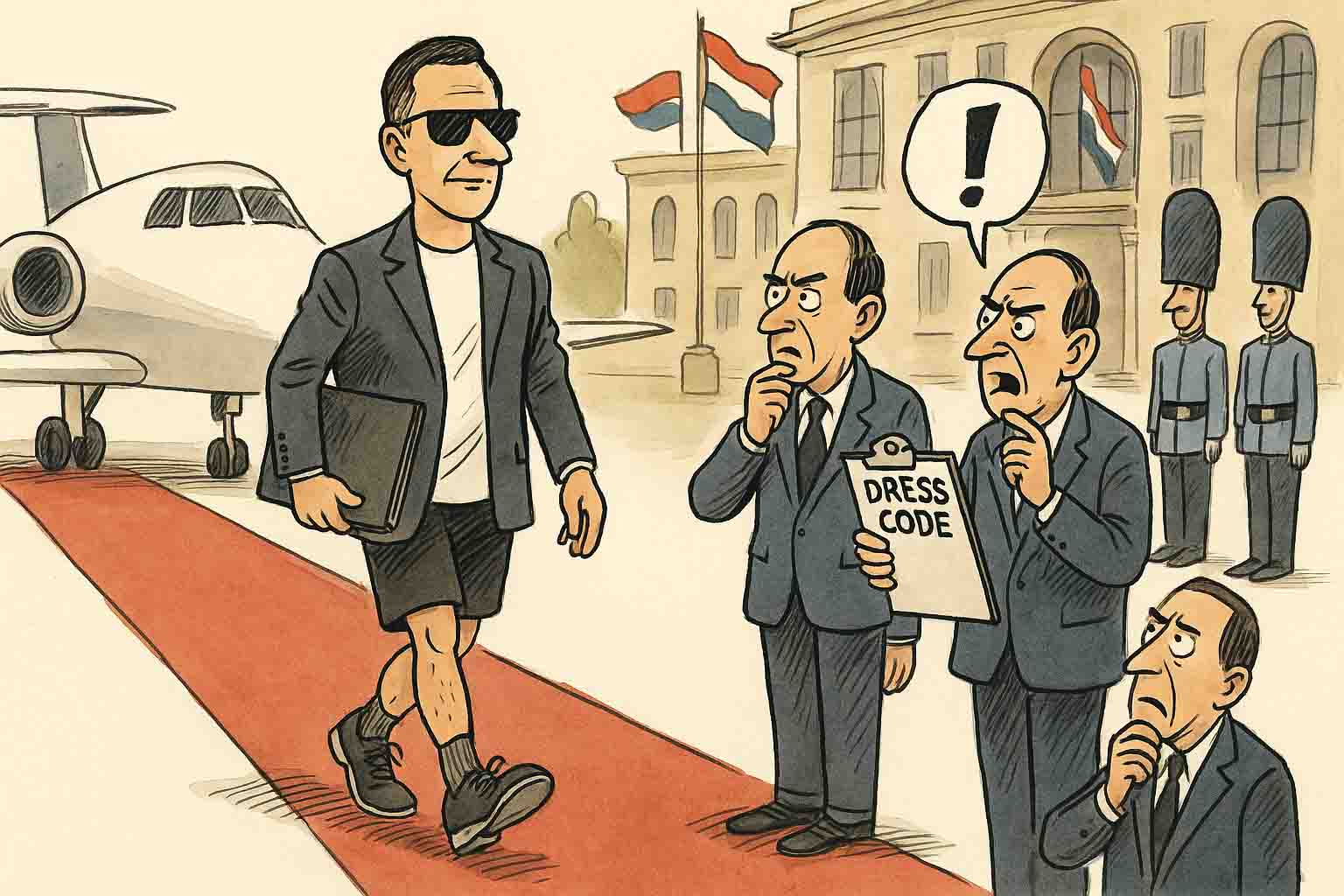
In most foreign ministries, diplomatic travel is a logistical exercise. In Hungary’s, it has become a lifestyle genre. For years, insiders on Budapest’s Bem rakpart have whispered about the increasingly operatic travel requirements of the country’s foreign minister, Péter Szijjártó. Now, fresh accounts confirm that what masquerades as protocol is in fact the curated comfort regime of a man who behaves less like a public servant and more like a monarch in tracksuit diplomacy.

Read more

When Diplomacy Becomes a Distortion: Rethinking Hungary’s Foreign Trade Machinerys

For more than a decade, Hungary has operated a parallel system within its foreign policy apparatus – a sprawling network of so-called foreign trade attachés (KGA), conceived as one of Minister Péter Szijjártó’s signature projects. Today, with 134 attachés stationed across 86 countries, the operation costs taxpayers an estimated 20 billion forints annually, a figure that invites the obvious question: what, exactly, does the Hungarian economy receive in return?
The honest answer is: very little.

Read more

The Institutional Background of Hungary’s Diplomatic Personnel Crisis

The foreign service is one of the most important state institutions of any country. Embassies and consulates do far more than perform protocol duties: they represent economic interests, facilitate strategic information exchange, carry out cultural diplomacy, provide security assessments, and manage crisis situations. Foreign policy can only function with a stable, well-trained, and professional staff. This is why it becomes particularly striking when a country’s diplomatic system gradually—almost imperceptibly—loses its professional weight and becomes increasingly politicised.

Read more

“We Were Trump Before Trump”: What the Democratic Party Must Learn from Hungary

“In international politics, we Hungarians are the only ones who have consistently said the same things as Trump since 2010. That’s why, in America, they see us as having been ‘Trump before Trump,’” said Hungarian Prime Minister Viktor Orbán in a December 2024 interview. There are many reasons to criticize Orbán, but he was not wrong in this statement. While Hungarian and American politics are not identical – given their vastly different historical, cultural, religious, and economic contexts – the form of global populism that Orbán himself calls “illiberalism” was pioneered by him in the Western world. And it began in 2010.

Read more

US Elections: Wake-Up Call for Political Strategy

The 2024 US elections have exposed enduring weaknesses and critical oversights in the approaches taken by the left worldwide, traditional media, and political strategists. In an era where populism continues to rise, trust in institutions declines, and social media shapes public discourse, the election results underscore the urgent need for strategic recalibration. Not for democrats, but for the American democracy.

Read more

The Election of the Year

This week, I had the opportunity to get a closer look at the excitement surrounding the American presidential election. As much as possible, I have been following events from this side of the Atlantic from a respectful distance. So far, I’ve mostly considered the prospects for cooperation with potential winners from the EU’s perspective, especially regarding the candidates’ stances on the war in Ukraine and any anticipated changes in their positions.

Read more
Title
.