
A Dutch Witness to Hungary’s Democratic Journey
Simon Wintermans’ life story connects Dutch family legacy, Central European transition, rural Hungary and a warning about the fragility of democracy.

Simon Wintermans’ life story connects Dutch family legacy, Central European transition, rural Hungary and a warning about the fragility of democracy.

When multinationals dominate precision agriculture with deep capital reserves and aggressive R&D cycles, a small Hungarian firm would seem an unlikely contender on the world stage. Yet Machinery Guide, a Szeged-based developer of agricultural guidance software and mobile-based control systems, has quietly expanded into more than 20 markets across Europe, South America and Australia. Its story shows how Central European engineering can gain global relevance even in one of the most competitive technology sectors.
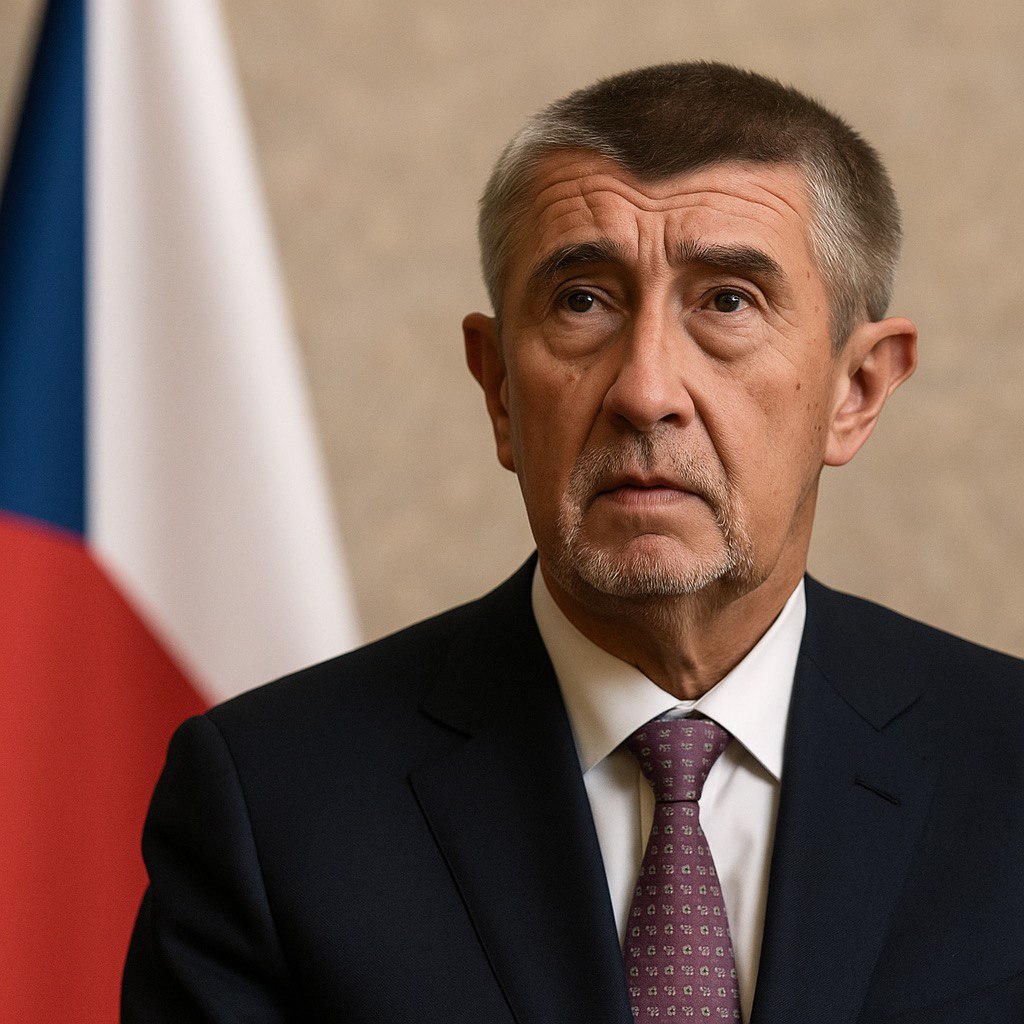
When Andrej Babiš re-entered Czech politics, it was more than a local political comeback — it sent tremors through the heart of Europe. For Brussels, his return revives a familiar, sometimes frustrating partner. For Central Europe, it raises a deeper question: can pragmatism still hold its ground in an era increasingly defined by populism?

As the European Union grapples with one of the most divisive digital policy debates in recent years, the so-called “Chat Control” proposal has come to symbolise a wider struggle between public safety and the right to privacy. Officially known as the CSAM scanning regulation, the measure seeks to detect and prevent the spread of child sexual abuse material online by requiring messaging platforms to automatically scan private communications.

The European tobacco industry stands at a crossroads. On the one hand, it continues to provide governments with a stable and predictable revenue stream—second only to income tax in Germany, and accounting for up to 5 per cent of annual budgets in countries such as Romania and Poland. On the other, the industry faces mounting political exclusion, regulatory mistrust, and a growing push for prohibitionist approaches that risk undermining both innovation and consumer choice.

When the Trump administration signed its Most-Favoured Nation (MFN) executive order in 2025, few doubted the measure would shake global pharmaceutical markets. By tying U.S. drug prices to the lowest government-negotiated rates in Europe and Canada, the White House pitched the plan as relief for American patients at the pharmacy counter.

From Brussels to Berlin, Europe’s liberal parties are struggling to define their role in an increasingly fragmented political landscape. Once the kingmakers of the European Parliament, they now find themselves relegated to the fifth-largest group, unable to balance left and right as they once did.

As the European Union contends with internal fragmentation and rising global uncertainty, Denmark has assumed the EU Council Presidency with a slogan that reflects both ambition and urgency: *“A strong Europe in a changing world.”* In a special episode of *CEA Talk*, Szilárd Szelpál spoke with Otto Brøns-Petersen, Director of Analysis at CEPOS and one of Denmark’s most influential economic voices, to unpack the deeper motivations and policy visions behind this presidency—and what it means for Europe’s political and economic trajectory.

In Brussels, where power often hides in plain sight, few know its rhythms better than former diplomat Gábor Baranyai. A two-time envoy to the European capital and a seasoned legal expert, Baranyai’s career path reflects not only the arc of Hungarian diplomacy, but also the institutional undercurrents shaping the EU’s political core.

In a world where geopolitical influence, technology, and entertainment converge more than ever before, the business of sport is fast becoming one of the defining arenas of global competition. In the second part of my conversation with Marlon Gilbert-Roberts, CEO of Business to Sports Group (B2S), we delved deeper into the shifting ground beneath international sport—spanning EU regulation, commercial partnerships, emerging markets, and athlete futures.

Central European Affairs Magazine