
When Andrej Babiš re-entered Czech politics, it was more than a local political comeback — it sent tremors through the heart of Europe. For Brussels, his return revives a familiar, sometimes frustrating partner. For Central Europe, it raises a deeper question: can pragmatism still hold its ground in an era increasingly defined by populism?
Author: Szilvia Kecsmar
A billionaire businessman with a flair for political timing, Babiš has always been a paradox — a Eurosceptic who relies on EU funding, a populist who governs with bureaucratic precision. As Martin Pánek, Director of the Liberal Institute in Prague, told CEA Talk, “Babiš has never been an ideologue. He’s pragmatic, sometimes opportunistic — and that makes him harder to predict.”
Forming a new government in Prague is never a swift process, but this time, it is particularly delicate. Babiš’s ANO party holds a strong position, yet it needs coalition partners whose populist leanings and limited experience may complicate governance. “They lack institutional depth,” Pánek notes. “The real battles might not be about ideology, but about egos.” The eventual outcome of this coalition arithmetic matters far beyond the Czech Republic’s borders. It will determine whether Prague continues its pro-European stance or drifts rhetorically toward the nationalist camp represented by Hungary’s Viktor Orbán. As Pánek points out, “The key question is whether Babiš wants to be seen as part of the mainstream — or part of the opposition to it.”
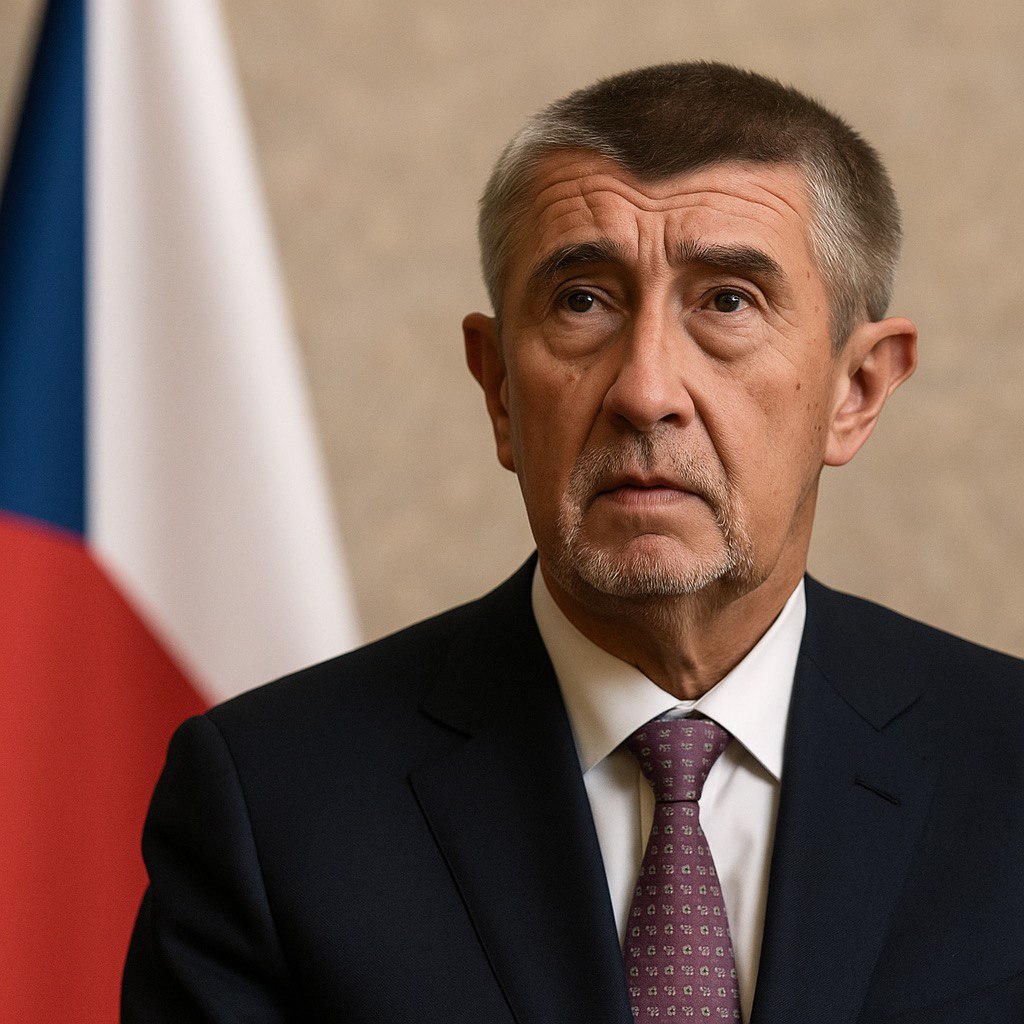
During his first term, Babiš’s leadership was largely technocratic and cautious, steering clear of the institutional clashes that defined Warsaw and Budapest. Yet the European landscape has shifted: economic uncertainty, energy pressures, and voter fatigue have deepened populist appeal. Even pragmatic leaders now use harder language on Brussels, migration, and climate policy. Pánek predicts moderation with sharper rhetoric: “He’ll sound tougher, but the substance will likely stay the same. Babiš wants to negotiate, not to rebel. Yet second terms can embolden leaders who feel vindicated by voters.”
That tension could be most visible in debates on the EU’s Green Deal and agricultural subsidies — sensitive topics across Central Europe, where environmental ambitions often collide with industrial realities. “Criticising EU regulation is easy,” Pánek observes, “but changing it is another story. The machine in Brussels rarely rewrites its own rules.”
Czechia’s role inside the Visegrád Group is also evolving. Once a unified bloc balancing Western influence, the group is now fragmented: Poland has realigned with Brussels, Slovakia drifts in and out of alignment, and Hungary stands defiant. “Prague sits somewhere in between,” Pánek says. “It wants to talk to everyone, but it no longer wants to be seen as Orbán’s ally.” This balancing act mirrors a wider European dilemma — how to maintain national autonomy without slipping into isolation. Babiš’s earlier closeness to Orbán was rooted more in pragmatism than ideology, but that relationship could become a liability as Western capitals watch for signs of a new illiberal axis.
Foreign policy under Babiš is likely to evolve subtly rather than dramatically. Support for Ukraine is expected to continue, though with a quieter tone. “Expect continuity with less rhetoric,” Pánek suggests. The greater change could emerge in migration and refugee policy, where Babiš’s populist partners may demand a tougher stance. Even symbolic shifts could reposition Czechia within ongoing EU debates about borders, solidarity, and shared responsibility.
Domestically, the presence of an assertive presidency and a stabilising Senate offers a measure of reassurance. These institutions serve as counterweights to executive overreach, ensuring that Czechia remains anchored in its democratic framework. This internal equilibrium — balancing populist impulses with institutional restraint — may prove the country’s greatest safeguard.
In the broader regional picture, Babiš embodies Central Europe’s uneasy middle path: neither fully populist nor comfortably liberal, pragmatic yet sceptical of elites. He represents a form of “managerial populism” — technocratic governance packaged in anti-establishment rhetoric. It’s a formula that resonates with voters across newer EU member states, where citizens seek both competence and defiance. For Brussels, the challenge will be learning to work with leaders like Babiš — figures who question the EU’s direction without rejecting it outright — or risk pushing them further toward nationalist narratives.
Despite speculation, few observers expect dramatic change in policy. Czechia’s institutional structure, modest voting weight, and deep integration in European mechanisms constrain radical shifts. “Even if Prague wanted to block major EU initiatives, it couldn’t do so alone,” Pánek concludes. “The real change will be in tone, not in treaties.”
Yet tone matters. In a Europe where perception often shapes politics, how Czechia speaks to both Brussels and Budapest will define its credibility in both arenas. Babiš’s second act will test whether Czech pragmatism can survive in a populist environment — and whether the region can still bridge East and West without losing the trust of either.
Czechia, once again, finds itself as Europe’s reluctant bridge — not by choice, but by geography. And as Babiš returns to power, the question is whether that bridge will still lead both ways.
Listen to the full CEA Talk episode: “Czechia’s Crossroads – What Babiš’s Return Means for Europe”
For more insights on Central European political risk, EU institutional developments, and transatlantic relations, follow CEA Magazine and the CEA Talk podcast.
Support independent analysis and journalism at CEA Magazine: https://centraleuropeanaffairs.com/donation
Cover photo credit: ChatGPT

Szilvia Kecsmar is a coach, writer and media informatics specialist.
