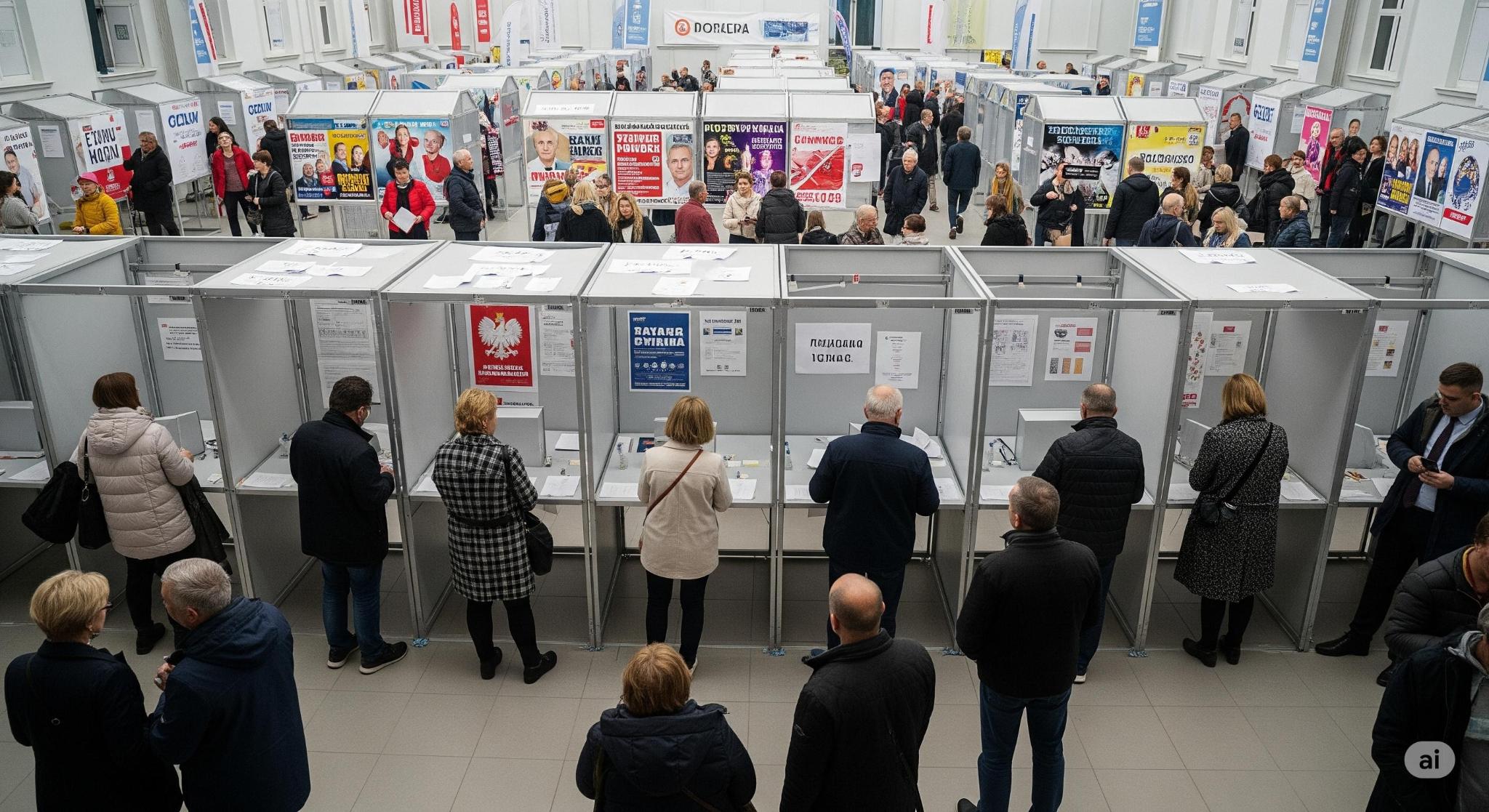
The Quality of Public Spending Is Declining Across Advanced Economies

Wealth of Nations Index 2026 finds that most governments now deliver less value for citizens’ money than a decade ago

Warsaw / Brussels – A new international ranking delivers an uncomfortable message for governments across the developed world: public sectors are becoming larger and more expensive, but citizens are often receiving less in return.

The Wealth of Nations Index 2026, prepared by the Warsaw Enterprise Institute together with 20 partner think tanks from around the world, shows that in 27 out of 40 countries the state delivers less value for public money than it did in 2015. The United States, Norway and Switzerland remain at the top of the ranking, while Romania, Croatia, Greece and Bulgaria stand out as the decade’s most notable climbers.

Read more

Hungary’s Quiet Agritech Challenger Goes Global

When multinationals dominate precision agriculture with deep capital reserves and aggressive R&D cycles, a small Hungarian firm would seem an unlikely contender on the world stage. Yet Machinery Guide, a Szeged-based developer of agricultural guidance software and mobile-based control systems, has quietly expanded into more than 20 markets across Europe, South America and Australia. Its story shows how Central European engineering can gain global relevance even in one of the most competitive technology sectors.

Read more

Europe’s Chat Control Dilemma: Between Child Protection and Digital Privacy

As the European Union grapples with one of the most divisive digital policy debates in recent years, the so-called “Chat Control” proposal has come to symbolise a wider struggle between public safety and the right to privacy. Officially known as the CSAM scanning regulation, the measure seeks to detect and prevent the spread of child sexual abuse material online by requiring messaging platforms to automatically scan private communications.

Read more

Most-Favoured Nation Drug Pricing Risks Transatlantic Rift

When the Trump administration signed its Most-Favoured Nation (MFN) executive order in 2025, few doubted the measure would shake global pharmaceutical markets. By tying U.S. drug prices to the lowest government-negotiated rates in Europe and Canada, the White House pitched the plan as relief for American patients at the pharmacy counter.

Read more

Denmark’s Balancing Act: Inside the EU Presidency’s Strategic Pivot on Climate, Security, and Sovereignty

As the European Union contends with internal fragmentation and rising global uncertainty, Denmark has assumed the EU Council Presidency with a slogan that reflects both ambition and urgency: *“A strong Europe in a changing world.”* In a special episode of *CEA Talk*, Szilárd Szelpál spoke with Otto Brøns-Petersen, Director of Analysis at CEPOS and one of Denmark’s most influential economic voices, to unpack the deeper motivations and policy visions behind this presidency—and what it means for Europe’s political and economic trajectory.

Read more
Title
.