
Sometimes a single gesture can travel further than words. A ring given by a mother in Africa to a woman she had never met becomes a symbol of the quiet, invisible bond between women, and of the shared strength of motherhood across continents.
Author: Szilvia Kecsmar
In our family, we have had two Mother’s Days for years. On the first Sunday of May, we celebrate according to Hungarian tradition. This is when the grandmothers are mostly at the centre. Then, on the second Sunday of May, comes Mother’s Day in Belgium. This is the one the children prepare for at school with secret drawings, little gifts, poems, and those touching, sometimes slightly sticky with glue, slightly crumpled, but always heartfelt surprises — the kind of gifts that are among the most beautiful things in the world. And I always bake something for the Sunday table. This is how this celebration has become whole for us: Hungarian and Belgian at the same time, filled with grandmothers and children’s drawings, brought from the past and lived in the present.
In this way, Mother’s Day is not confined to a single day, but somehow expands. There is room in it for family, for roots, for life between countries, for the children’s busy hands, for the stories of grandmothers, for the scent of Sunday cake, and for all that invisible work that holds us together across generations.
On this second, Belgian Mother’s Day, a memory found its way back to me.

At the beginning of the year, my husband travelled to Kenya for a leadership training programme.
When he came home, he carried back many things with him: people, conversations, encounters, thoughts. But there was one story that has returned to me again and again ever since.
One of the African women participating in the training told him how difficult it was for her to balance raising children, working and studying. How, while trying to be present as a mother, to hold her own in her work, to grow, to study, to dream, to build something for herself and her family, she sometimes feels as though she is being pulled in every direction at once.
My husband understood exactly what she meant. He immediately told her that his wife, too, works and studies while raising three children, trying to grow, to be present. Somehow trying to carry life forward.
Hearing this, the woman became deeply emotional. She took the Africa-shaped ring from her finger, placed it in my husband’s hand and said: “Give this to her, and hug her very tightly for me.”
A woman, a mother, from another continent.
A person I have never met. Someone who does not know me, who does not know what an ordinary morning looks like in our house, how many times my coffee is left unfinished, how many times we search for schoolbooks before leaving, how many times I sit down in the evening to study or work, even though I should have been in bed long ago, too. She does not know when I cry, when I laugh, when I feel that everything is too much all at once, or when I feel that I could not imagine a more beautiful life.
And yet she understood something. About me.
Perhaps she did not need to know me. Perhaps it was enough that she, too, is a mother. That she knows what it is like to love, to worry, to organise, to hold on, to let go, to teach, to learn, to build, to begin again — all at once. She knows what it is like to want to be strong and, at the same time, to rest on someone’s shoulder. She knows what it is like to tidy up after the children while mentally thinking through a deadline. She knows what it is like to smile even when you are tired. And she understands perfectly, because she has lived it a thousand times, how in the middle of the deepest exhaustion a child curls up beside you, and suddenly everything has meaning again.
I am sitting in our Belgian home, writing these lines. The ring is here on my finger. It came from another continent, from the hand of another mother. And as I write, I think of a woman somewhere in Africa who may be moving through the same quiet rhythm of days as I am. Making breakfast. Sending children off into the day. Working. Studying. Planning. Worrying. Hoping. Growing weary. Sometimes feeling she is not enough, at other times proud of all she has managed to do that day. Perhaps now and then, when her children are already asleep, she thinks of a woman living in Europe to whom she once gave her ring.
And that thought touches me deeply.
Because there is something invisible in it, and yet something very real.
A bond that is not born of blood, nor of a shared language, country or culture, but of the infinitely honest recognition that we are all part of the same human story.
That motherhood carries the same weight all over the world: wonderful and difficult at once. Sweet and bitter. Full of laughter and tears. Uplifting and exhausting. A task that may seem simple, and yet so often asks everything of us.
Being a mother means that one day, your heart begins to beat outside your body too. It means living in the present and the future at the same time: packing snacks, helping with homework, and meanwhile working to build a future in which your children can grow up brave, free and loved.
There are days when you feel that everything is in its place, and other days when all you can say is: we survived. And truly, sometimes that is the most a day can hold.
Being a mother does not mean perfection. Not a spotless home, not an endlessly patient voice, not a dinner always ready, not thoughts always neatly arranged. Being a mother means, more than anything, showing up again and again. When it is easy, and when we have no idea whether we are doing it right.
And meanwhile, we carry our dreams with us.
Because motherhood does not mean that we cease to be ourselves. We rearrange, of course; we rebuild everything. But our desires remain. The need to grow, to learn, to build a vocation, a meaningful path of our own, still lives within us. Sometimes like a barely flickering flame; at other times, it seems like a vision of the future reduced entirely to ash. And yet we are “only” reframing. In truth, motherhood is an incredibly powerful driving force. For we are no longer responsible only for ourselves: we set an example in every moment, with every decision, word and action. Even by daring to want more, while remaining lovingly present.
And perhaps that is why this invisible thread between mothers is so strong.
Because although we live in different places, speak different languages, cook different foods and sing different songs at bedtime, we still know one another’s silence. We know the tired evenings. The worried nights. The proud moments. The sound of children’s laughter. The tears no one sometimes sees. And also that strength which, so often, we ourselves do not even know is ours.
On Mother’s Day, this is what I think about. Beyond the flowers, the hugs and the drawings, I think of that vast, world-spanning strength of women that quietly holds together families, communities, futures. Women who build, who care, who hold things together, and who begin again, day after day.
And I think, too, that perhaps we are far more connected than we realise. By a ring. By a story. By a hug sent by someone from another continent.
Without ever having met.
Cover photo credit: Szilvia Kecsmar
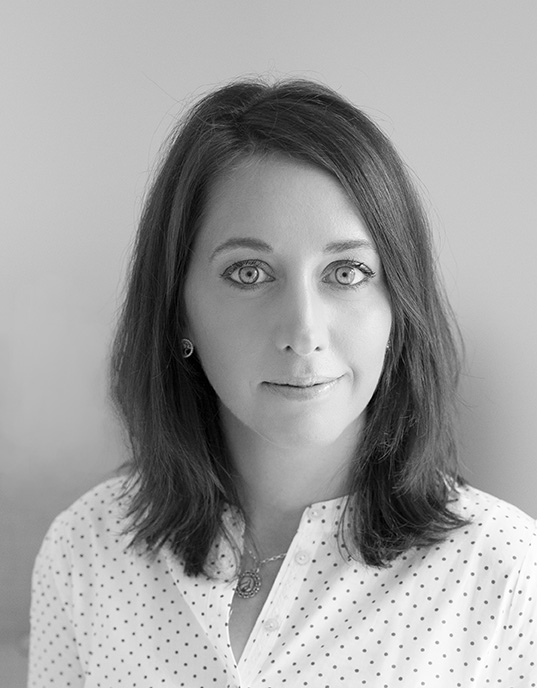
Szilvia Kecsmar is a coach, writer and media informatics specialist.
For more insights on Central European political risk, EU institutional developments, and transatlantic relations, follow CEA Magazine and the CEA Talk podcast.
Support independent analysis and journalism at CEA Magazine: https://centraleuropeanaffairs.com/donation
