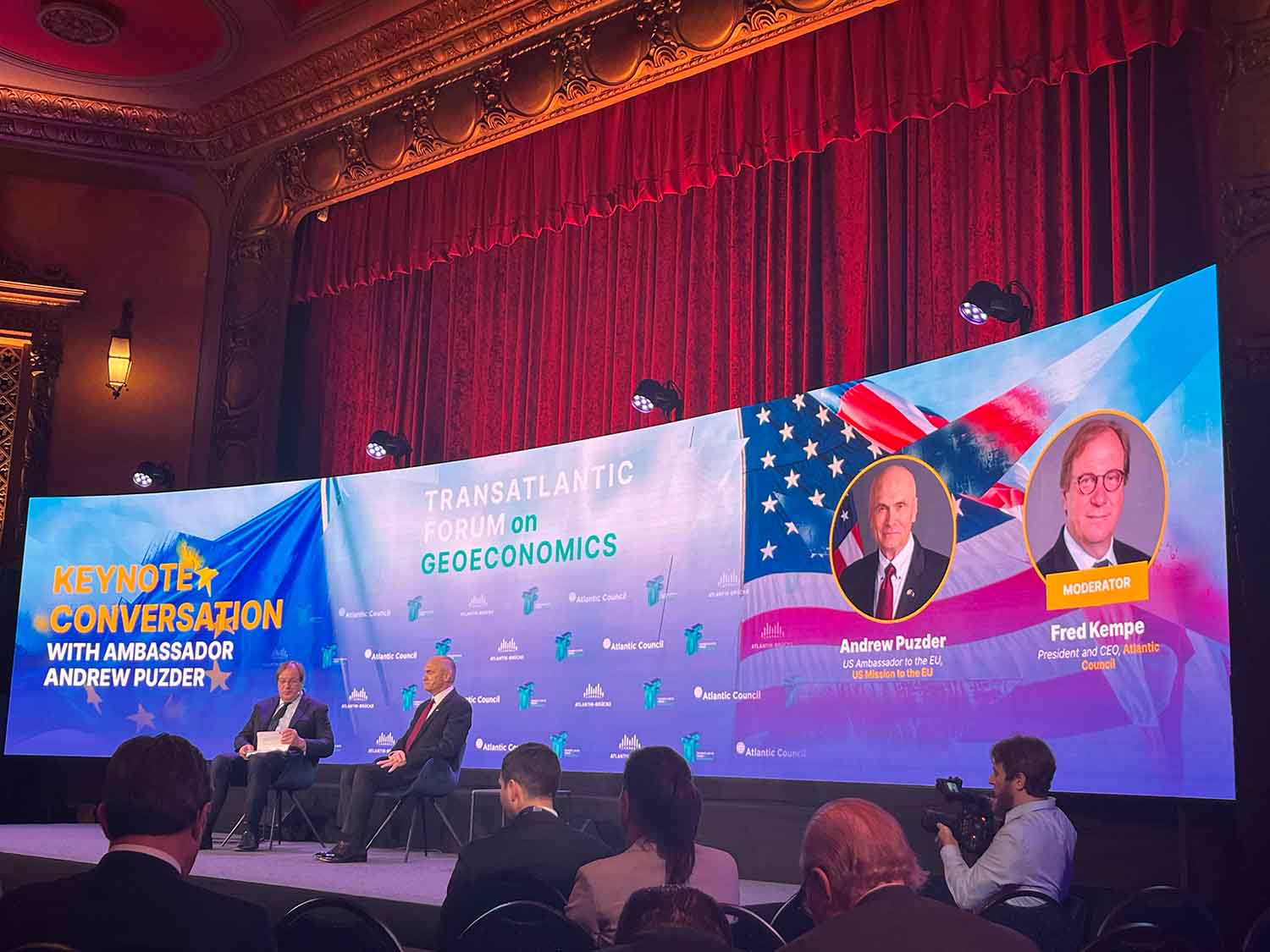
A New Chapter for the Transatlantic Economy

The chandeliers glittered in the ballroom of the Atlantic Council as diplomats, ministers, and executives filtered in for the opening session of the Geoeconomics Forum. The event promised high-level conversation on trade, technology, and global markets, but there was little illusion about the stakes: the EU–US relationship is being reshaped in real time by war, energy shocks, and the race for technological supremacy.

Read more

Tobacco, Regulation, and the Future of Choice in Europe

The European tobacco industry stands at a crossroads. On the one hand, it continues to provide governments with a stable and predictable revenue stream—second only to income tax in Germany, and accounting for up to 5 per cent of annual budgets in countries such as Romania and Poland. On the other, the industry faces mounting political exclusion, regulatory mistrust, and a growing push for prohibitionist approaches that risk undermining both innovation and consumer choice.

Read more

Liberalism’s Crisis of Confidence in Europe

From Brussels to Berlin, Europe’s liberal parties are struggling to define their role in an increasingly fragmented political landscape. Once the kingmakers of the European Parliament, they now find themselves relegated to the fifth-largest group, unable to balance left and right as they once did.

Read more

Sporting Ambitions and Strategic Shifts: How Business, Policy, and Legacy Shape the Future of Athletics

In a world where geopolitical influence, technology, and entertainment converge more than ever before, the business of sport is fast becoming one of the defining arenas of global competition. In the second part of my conversation with Marlon Gilbert-Roberts, CEO of Business to Sports Group (B2S), we delved deeper into the shifting ground beneath international sport—spanning EU regulation, commercial partnerships, emerging markets, and athlete futures.

Read more

From the Courtroom to the Touchline: How Law, Strategy, and Trust Are Shaping the Future of Sport – PART 1

Sport has long since outgrown the confines of stadiums and scoreboards. Today, it is an economic powerhouse, cultural soft power tool, and global platform for technological innovation. Few people understand this complex intersection of law, commerce, and performance better than Marlon Gilbert-Roberts, a former international criminal lawyer turned CEO of the Brussels-based consultancy Business to Sports Group.

Read more

The Brave New Biology of Xenobots

“We are standing at the frontier. And when you stand at the frontier, you must stay curious — and critical.”
— Simon Verghote, ULB researcher in bioethics and synthetic biology

It begins with a frog, and a question as old as philosophy itself. In a laboratory at the Université libre de Bruxelles, Simon Verghote is part of a group exploring xenobots — tiny programmable organisms designed by artificial intelligence, constructed from real living cells.

Read more

Rebuilding Transatlantic Trust: Consumers, Trade Tensions, and a New Chapter in EU-US Cooperation

In an era marked by intensifying geopolitical shifts, rising protectionism, and digital fragmentation, transatlantic cooperation between the United States and the European Union faces a critical juncture. At the heart of this moment is the consumer: a figure too often overlooked in policy debates, yet profoundly impacted by the rippling consequences of trade wars, regulatory divergence, and economic uncertainty.

Read more

How Can He Make America Great Again?

Even before his election, President Trump made his vision for transforming US foreign policy clear. Since taking office, he has actively engaged in foreign policy battles, primarily driven by his agenda. But let’s take a quick look at the necessary steps he has taken in the two weeks since taking office and the chaos he has caused at the start of Mr Trump’s second term.

Read more

What will become of the American car industry?

The Paris Climate Agreement, signed in 2015 and entering into force on 4 November 2016, is a landmark in human history, as was the creation of the United Nations. The treaty is crucial because it is the first international agreement in a long time that, although not legally binding, is based on voluntary commitments and has been accepted by almost all countries worldwide. Perhaps only FIFA has more signatories and members.

Read more
Title
.