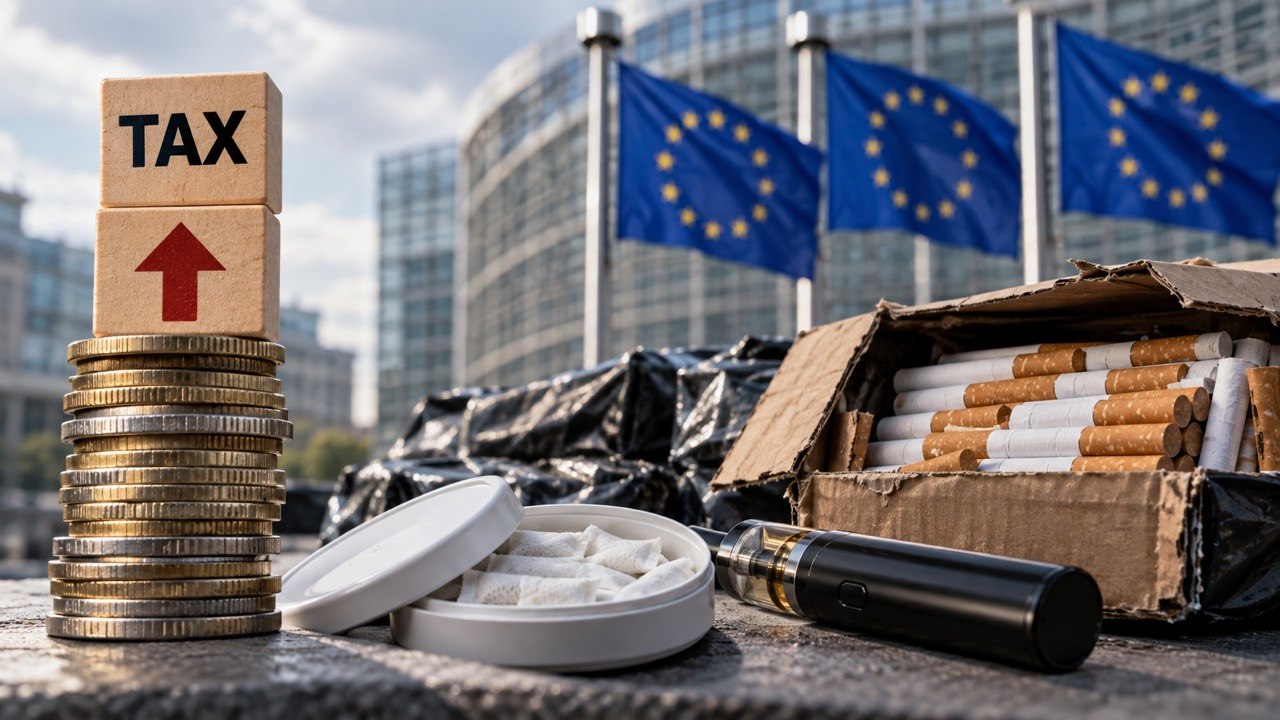
The EU should not tax nicotine too highly
Millions want to quit smoking. But levies that climb too high may instead push people into the black market.

Millions want to quit smoking. But levies that climb too high may instead push people into the black market.

For years, the EU has branded itself as global regulator. With a slowing economy, it promises to reverse past decisions. But its economy will only thrive if it abandons this indecisive course. Its U-turn over banning internal combustion engines is a case in point.

A coalition of prominent European free-market think tanks, including the Warsaw Enterprise Institute, Prosum Foundation, and Foro Regulación Inteligente, has sent a strongly-worded open letter to European Commission President Ursula von der Leyen. They urge a comprehensive overhaul of European Union regulations and governance to foster innovation and boost economic growth amid fierce global competition.

Europe is at a crossroads. The continent’s economic engine, long admired for its stability and innovation, is losing momentum. Rising competition from the United States and China, combined with a growing regulatory burden, threatens to make Europe uncompetitive on the global stage. Faced with this reality, the EU must confront a hard truth: overregulation is strangling its economic potential. If Europe wants to remain a global leader, deregulation isn’t just an option – it’s a necessity.
Even before his election, President Trump made his vision for transforming US foreign policy clear. Since taking office, he has actively engaged in foreign policy battles, primarily driven by his agenda. But let’s take a quick look at the necessary steps he has taken in the two weeks since taking office and the chaos he has caused at the start of Mr Trump’s second term.
The Paris Climate Agreement, signed in 2015 and entering into force on 4 November 2016, is a landmark in human history, as was the creation of the United Nations. The treaty is crucial because it is the first international agreement in a long time that, although not legally binding, is based on voluntary commitments and has been accepted by almost all countries worldwide. Perhaps only FIFA has more signatories and members.

This question is being asked with increasing frequency, especially when following the news, which often highlights the challenges facing European car manufacturers or managerial and operational issues within the industry. What we know for sure is that Europe’s largest carmakers, such as the Volkswagen Group (VAG) and Stellantis, are grappling with numerous problems. Even Renault, while appearing to manage market and corporate difficulties better, is not entirely unscathed by the current turbulence.

Central European Affairs Magazine