
Is the United Kingdom beginning to come apart?
Scotland, Wales and Northern Ireland are now led by parties that see their future in Europe. But leaving the United Kingdom is one thing. Getting back into the European Union is another.

Scotland, Wales and Northern Ireland are now led by parties that see their future in Europe. But leaving the United Kingdom is one thing. Getting back into the European Union is another.
Economic stagnation, Brexit and political fragmentation have left the United Kingdom searching for a new direction.
As the collapsing Orban era gradually shuts down one pro-government media outlet after another, and Hungary edges closer to becoming a country without a single national printed daily newspaper, something new is arriving.
It appears that Viktor Orbán may soon withdraw from the front line of politics. It is therefore time for us, too, to reflect on what renewal means for us.
There can be no meaningful reconciliation in Hungary while Viktor Orbán remains untouched by legal and political accountability.
This is the impression I drew from Peter Magyar’s speeches delivered in Szarvas and Bekescsaba.
It is important, however, to clarify a fundamental misunderstanding. Zelensky’s controversial statement in question was not directed at Hungarian society as a whole, as Peter Magyar interpreted it, but referred exclusively to Viktor Orban. If the political practice of presenting criticism directed at one individual as an attack on the entire nation sounds familiar, that is hardly accidental. This communication method has long been present in Hungarian political discourse, particularly when the prime minister or the government faces criticism.

In just a few weeks, perhaps one of the most exhausting, symbolically understood Zimbardo experiments in the history of Hungarian society will come to an end. Observing from abroad, from the United Kingdom, it increasingly feels as if the political processes of recent years have reshaped not only institutions but also roles. The question today is no longer merely who will govern, but also who will remain “prisoners” and who will become the guards of the next cycle in a system where political identity is slowly overriding the personal one.
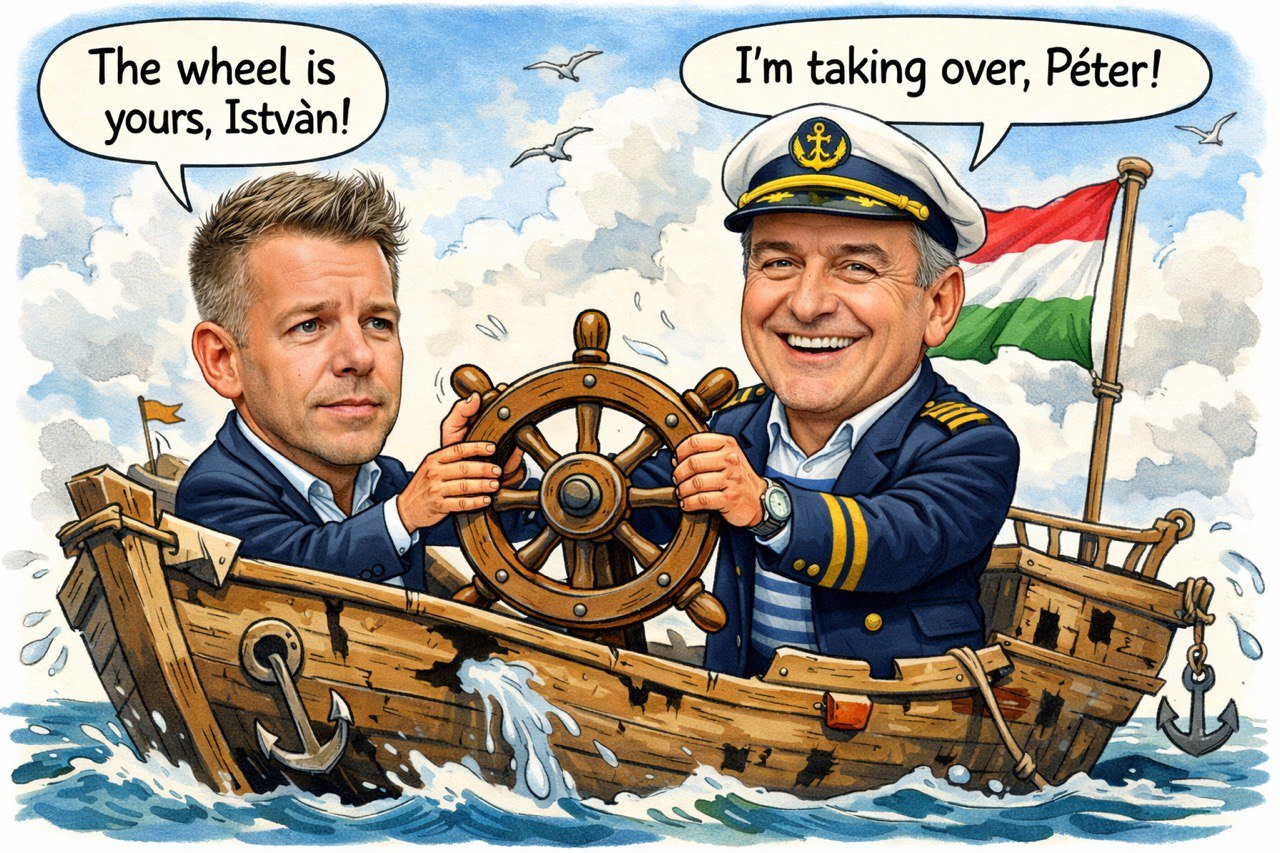
István Kapitány, one of Shell’s global executive vice presidents, has stormed into Hungarian politics with enormous energy, right at the peak of the campaign season. He has put a 37-year multinational career and a carefully built international reputation on the table for what he sees as a higher calling: securing victory for the Tisza Party. And it seems even the party’s leader has begun to realise that a long-running one-man show may no longer be enough.

Central European Affairs Magazine