
Far from Africa – Close to Budapest
I thought that after earlier debates around naturalisation, there was little left that could surprise me about Hungarian citizenship policy. I was wrong.

I thought that after earlier debates around naturalisation, there was little left that could surprise me about Hungarian citizenship policy. I was wrong.
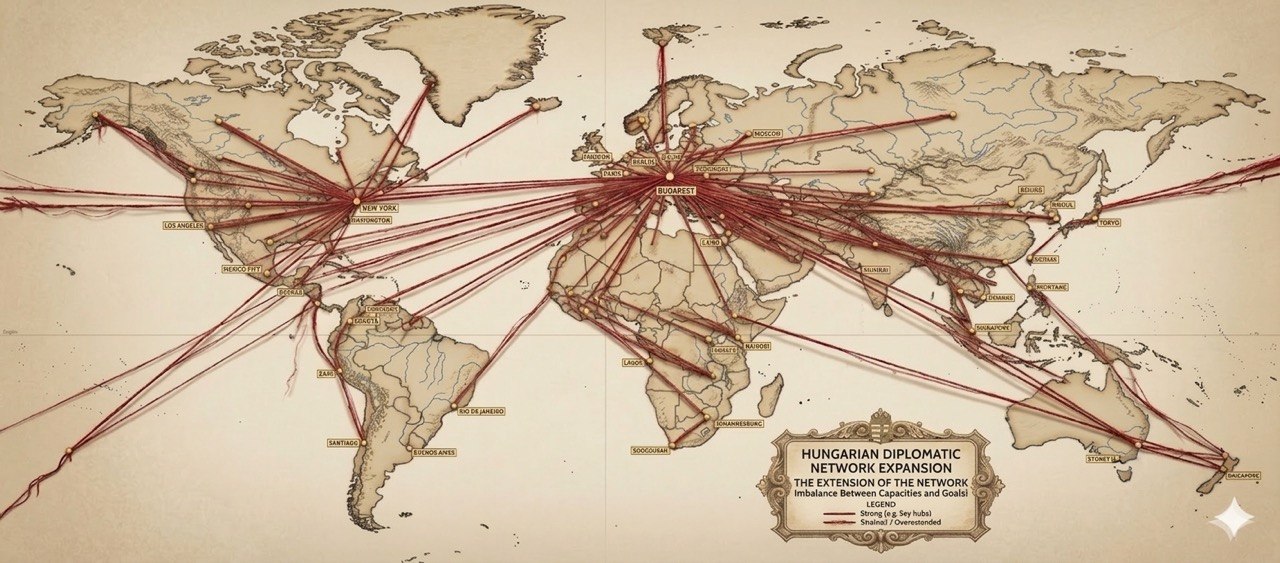
Hungary’s diplomatic network has expanded well beyond what its foreign policy priorities, institutional capacity, and professional standards can reasonably sustain. Any serious reform of the foreign ministry will have to address not only questions of cost, but also the structure, purpose, and staffing logic of its global presence.

The End of Hungary’s “Opening to the East”. For years, Viktor Orbán’s government sold the East as Hungary’s economic future and the West as a fading dependency. But the trade numbers never supported the fantasy and after Tisza’s landslide victory, the political system that sustained it may be starting to collapse as well.

The port project in Trieste is being overseen not by the transport or economic ministry, but by the Ministry of Foreign Affairs and Trade (KKM). Since then, the state-run structure has produced three loss-making companies, operating costs worth billions of forints, and an investment project that keeps slipping year after year.

Presented as an instrument of soft power, Hungary’s teqball diplomacy raises deeper questions about transparency, political priorities, and the use of public money in foreign policy.

Central European Affairs Magazine