Hungary – Justice or Promise?

Post-transition compensation was not merely an economic issue, but also a test of trust, self-determination, and the promise of historical redress. In Hungary, however, the gap between legal settlement and the social sense of justice quickly gave way to disillusionment.

Read more

Forced Adaptation and Inherited Silence

The Socio-Psychological Legacy of Collectivization in Hungary (1961–1990). The end of collectivization did not bring genuine resolution: the loss of land, forced adaptation, and unspoken fears left behind a mental legacy that remains visible today through family patterns and broader forms of social behaviour.

Read more

The Shadow Foreign Ministry

Power, Patronage and Hidden Wealth Behind Hungary’s Diplomacy
The classical diplomatic function of the Ministry of Foreign Affairs and Trade has undergone a visible transformation in recent years. On the surface, the traditional elements of foreign policy still remain visible: ministerial flights to important and less important destinations around the world, the repeated announcement of new economic successes, the consular protection of supporters in stadiums and on trains, and the building of a peculiar foreign policy network referred to as “connectivity.”

Read more

Whoever Dares to Threaten Viktor Orban Is Picking a Fight with Peter Magyar

This is the impression I drew from Peter Magyar’s speeches delivered in Szarvas and Bekescsaba.
It is important, however, to clarify a fundamental misunderstanding. Zelensky’s controversial statement in question was not directed at Hungarian society as a whole, as Peter Magyar interpreted it, but referred exclusively to Viktor Orban. If the political practice of presenting criticism directed at one individual as an attack on the entire nation sounds familiar, that is hardly accidental. This communication method has long been present in Hungarian political discourse, particularly when the prime minister or the government faces criticism.

Read more

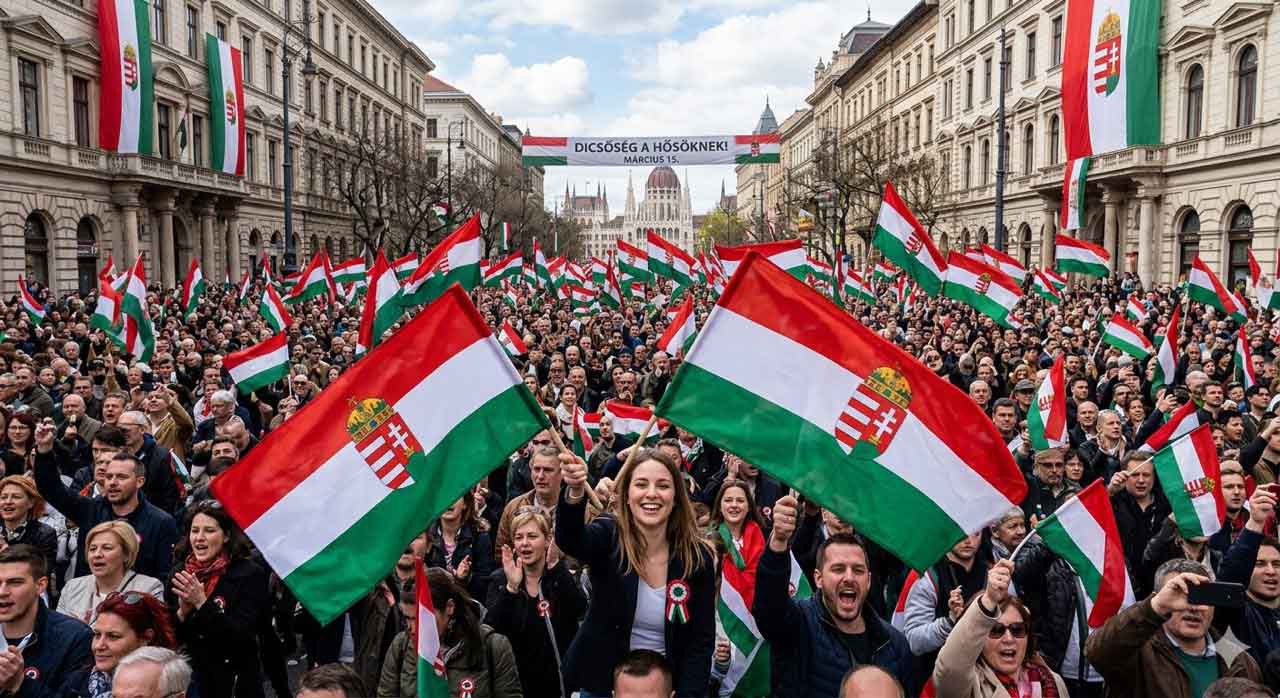
When Public Holidays Become Political Battlegrounds

How polarisation, permanent campaign rhetoric, and the logic of political warfare have transformed Hungary’s shared civic rituals.
Several holidays are approaching. March 15 marks Hungary’s national holiday, followed by Easter at the beginning of April, and, a week later, parliamentary elections. According to the governing party, Fidesz, the latter is also a “celebration of democracy.” A holiday is, by definition, a special day. It is a moment when we remember something important to an individual, a community, or a nation, or when we commemorate a person who played a significant role in the life of that community or achieved something meaningful.

Read more

Entering the German School System Without Speaking the Language: A Family’s Experience in Munich

A family’s firsthand insights into navigating Deutschclasses, competitive entry programs, and the German education system. Germany’s education system is increasingly tested by international mobility and migration. Every year, families arrive from across Europe and beyond with school-age children who must find their place in a system they do not yet understand – and often in a language they do not yet speak. What happens when such a family enters the system?

Read more

Attic Sweeping – Collectivisation or how our great-grandparents became kulaks

This is the first part of a four-part series examining the practice of attic sweeping. In the following instalments, I will analyse the forced reorganisation of families’ lives, the redistribution carried out through compensation vouchers and the disappointments associated with it, and finally the opportunities that may still be found in the present. For now, we look back at how the foundations of family livelihoods were once taken away.

Read more

Once Upon a Time There Was an OÉT

Once upon a time there was an institution in Hungary where the most important questions of the world of work were not decided solely by the government. Wages, employment conditions, labour law regulations and certain elements of the social welfare system were discussed jointly by the three key actors of the economy: the state, employers and employees. This institution was called the National Interest Reconciliation Council.

Read more
Title
.