
There is something peculiarly Hungarian about a railway construction tender in which the contract goes not to the company offering to do the job for the lowest price, but to the one that successfully demonstrates that its competitor’s bid was too cheap. There is, of course, a perfectly reasonable legal explanation for all this. It just so happens that, somewhere along the way, the final contract values climb by a few billion forints. Meanwhile, the Hungarian railway construction market is undergoing a remarkable changing of the guard: yesterday’s beneficiaries are losing ground, while Austrian-owned companies are winning one tender after another. The question is no longer simply who lays the tracks, but whether political change will bring genuine market competition or merely replace the familiar names on the list of winners with a new set.
Author: Szilárd Szélpál
When the Cheaper Bid Turns Out to Be the More Expensive One
On Hungary’s railways, passengers generally have rather modest expectations: they would like their train to depart and, preferably, to arrive at its destination. In the world of railway construction tenders, however, things are somewhat more complicated. There, it is not necessarily the bidder offering the best price that reaches the finish line first. Sometimes, it is the one with the stamina to survive the legal obstacle course.
Take, for example, the renovation of the railway section between Városliget Junction and Kőbánya-Teher in Budapest. We are not talking about some extravagant prestige project, but a mere 2.5-kilometre stretch of the Budapest–Szolnok–Debrecen–Nyíregyháza–Záhony main railway line. This is infrastructure used daily by passenger and freight trains, whose condition is hardly irrelevant to the functioning of Hungary’s railway network.
The consortium formed by Homlok Fővállalkozó Kft. and Vasútvill-Gép Kft. submitted a net bid of HUF 2.972 billion. Another bidder, Vasútépítők Kft., offered to carry out the work for approximately HUF 3.493 billion, while Austrian-owned Swietelsky Vasúttechnika quoted HUF 3.976 billion. By straightforward arithmetic, the difference between the lowest and highest bids exceeded one billion forints. Put differently, Swietelsky was asking roughly 34 per cent more to carry out the same project than the cheapest bidder. Yet Swietelsky ultimately won the contract.
A similar scenario unfolded on the neighbouring, approximately four-kilometre stretch between Kőbánya-Teher and Kőbánya-Kispest. The Homlok–Vasútvill-Gép consortium offered HUF 4.432 billion, while Swietelsky submitted a bid of HUF 5.625 billion. This time, the difference was nearly HUF 1.2 billion, and once again, the Austrian-owned company secured the contract. Taken together, the two projects could have cost approximately HUF 7.4 billion based on the lowest submitted bids. Instead, the combined value of the winning bids approached HUF 9.6 billion. That is a difference of HUF 2.2 billion. Hardly pocket change, particularly in a country where virtually unlimited amounts of money could be spent on upgrading railway services, repairing deteriorating tracks and modernising ageing infrastructure.
Before anyone concludes that HUF 2.2 billion in public money has somehow vanished into thin air, however, it is worth examining what actually happened. Because the story is not quite what it seems at first glance. In fact, it is considerably more interesting.
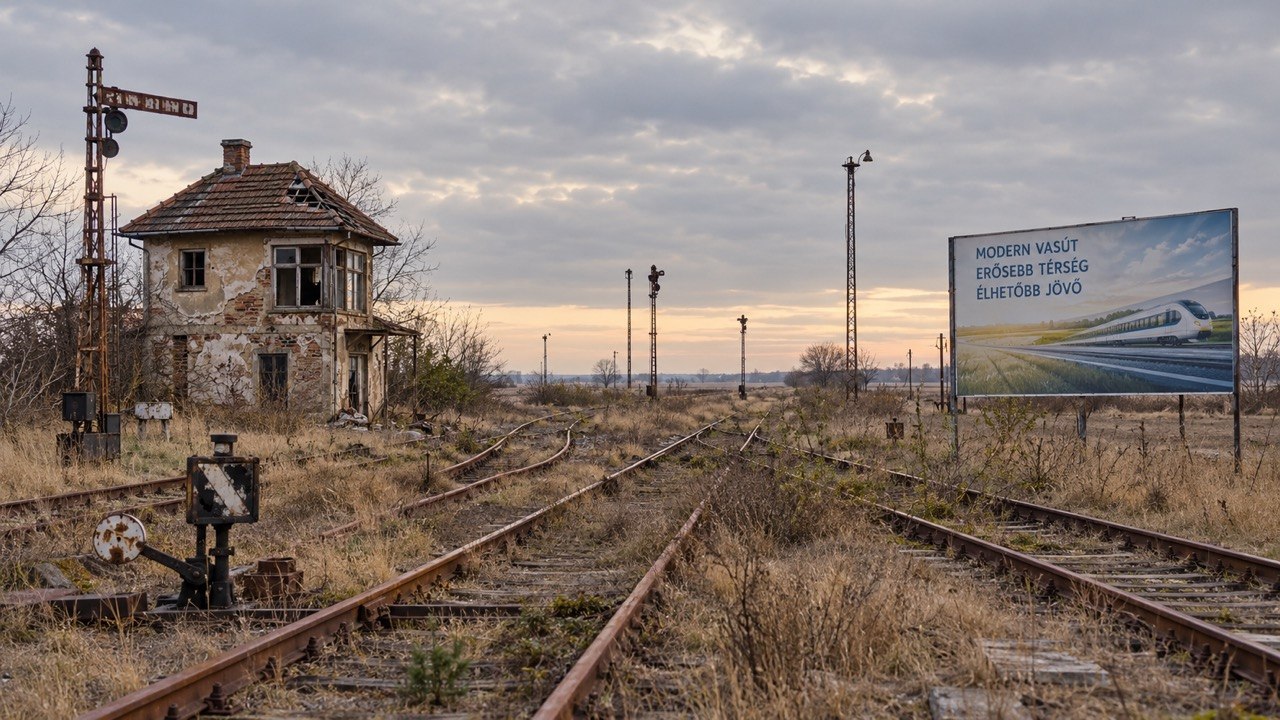
The Peculiar Sin of Being Too Cheap
The Hungarian railway infrastructure operator, MÁV, initially declared the Homlok–Vasútvill-Gép consortium the winner of both tenders. At first, therefore, everything appeared to follow conventional market logic: whoever offered to do the job for less would get the contract. Swietelsky, however, was not prepared to leave matters there. It initiated a preliminary dispute resolution procedure and subsequently turned to the Public Procurement Arbitration Board, arguing that MÁV had improperly accepted its competitors’ explanations for their unusually low prices.
Public procurement law contains a concept that sounds rather peculiar at first: the abnormally low tender. Its underlying logic is entirely understandable. Public procurement should not become a race to the bottom in which a contractor promises the impossible, only to go bankrupt halfway through the project or attempt to recover the missing money through additional works and contract modifications. Nor should wages, social contributions or compliance with labour regulations become negotiable luxuries. A low bid must therefore be justified, and in considerable detail.
This is precisely where things went wrong for the Homlok companies. Their price explanations failed to provide sufficiently detailed calculations for several cost items, including wages, working hours, social contributions and indirect expenses. The Public Procurement Arbitration Board found that MÁV had unlawfully accepted the documentation despite these shortcomings. The original contract award decisions were annulled, and the railway operator was fined a total of HUF 57 million across the two cases. There is, however, a small but rather important distinction. The Arbitration Board did not establish that the Homlok companies would necessarily have been incapable of completing the projects for HUF 2.9 billion and HUF 4.4 billion, respectively. It concluded that they had failed to demonstrate adequately how the works could be carried out for those amounts. Legally speaking, these are not quite the same thing.
And this brings us to one of the more intriguing aspects of the story. In public procurement, an insufficiently detailed explanation of costs can have consequences worth billions. The company offering the more attractive price is eliminated, the more expensive bid remains valid, and the procedure continues in full accordance with the applicable rules. Naturally, such rules are necessary. Anyone seeking to build railways with taxpayers’ money can reasonably be expected to know how to do the maths. Still, one cannot help wondering whether the shortcomings in the price justification concealed genuine risks to the project’s delivery, or whether an otherwise perfectly feasible offer simply fell victim to the finer details of the paperwork. The distance between these two possibilities is not measured in decimal places, but in more than two billion forints. And while the legal outcome is clear, the economic question remains very much open.
The New Favourites of Railway Construction?
The two Budapest projects would be interesting enough on their own, but over recent months, a far more substantial reshuffling has been taking place in Hungary’s railway construction market. Swietelsky Vasúttechnika, for example, also secured a net HUF 36.329 billion contract to modernise the railway section between Almásfüzitő and Komárom. According to a report by Telex, a consortium involving A-Híd and its Slovak partner submitted a bid of approximately HUF 33.8 billion, some HUF 2.5 billion below the winning price. Transport Minister Dávid Vitézy, however, described Swietelsky’s offer as the cheapest. The apparent contradiction may once again relate to the validity of the competing bids, although without examining the complete evaluation documentation, no definitive conclusion can be drawn. What is beyond dispute is that Swietelsky’s order book has been expanding at a remarkable pace.
According to an August analysis by Telex, the company won close to HUF 80 billion worth of railway construction contracts in Hungary in just four months. This is particularly striking considering that its annual revenue, which stood at approximately HUF 33 billion in 2020, had fallen to a mere HUF 6 billion by 2024. The Austrian-owned company, which had previously lost much of its position in the Hungarian railway construction market, has thus re-emerged as one of its major players within a matter of months. Its managing director, Szabolcs Vingelmann, attributed the company’s success to professional expertise and competitive pricing. He also emphasised to Telex that the winning bids had remained below the contracting authorities’ original cost estimates. This is certainly relevant. So is the fact that Swietelsky is not some letterbox company whose principal asset consists of knowing the right people. It has extensive European railway construction experience, a modern fleet of specialised machinery and substantial technological expertise. Its Hungarian subsidiary employs Hungarian professionals, many of whom worked on foreign projects during the years when domestic contracts were in short supply.
None of this, however, makes the timing of the company’s sudden resurgence any less interesting. To understand it, one needs to look back over the past decade and a half. For many years, the dominant force in Hungary’s railway construction market was V-Híd Építő Zrt., a company associated with businessman Lőrinc Mészáros. V-Híd was involved in several major developments, including the Budapest–Belgrade railway and the Southern Railway Ring project in Budapest. The company generated revenues of approximately HUF 169 billion in 2023, HUF 188 billion in 2024 and HUF 168 billion in 2025. With an order book of that magnitude, a company can build formidable capacity: purchase machinery, recruit specialists, accumulate references and then use its strengthened position to compete for yet more public contracts.
The system has a rather convenient tendency to perpetuate itself. Those who receive a steady stream of government contracts become increasingly well equipped to win the next ones. Those left outside the circle eventually have little choice but to reduce their capacity, seek opportunities abroad or withdraw from the competition altogether. Market concentration can therefore develop even when individual procurement procedures comply with the law. Nor do the market structures established under a previous political administration simply disappear following a change of government. Railway construction machinery, engineers and technical references do not operate according to four-year electoral cycles. Swietelsky’s recent successes therefore represent, at least in part, the return of an established market participant. The question remains whether Hungary is witnessing the emergence of a genuinely competitive market or merely the beginning of a new form of concentration.
The Last Train of the Old System
Meanwhile, the story has acquired another chapter, this time with considerable political significance. On 9 October 2026, Prime Minister Péter Magyar and Minister of Transport and Infrastructure Dávid Vitézy announced that the government was suspending the Southern Railway Ring project and taking steps to exclude V-Híd from the affected ongoing railway construction tenders. The decision was justified by concerns over potential conflicts of interest in the project’s preparation. At the centre of the controversy is the Kontúr Group, which had participated in the preparatory work and subsequently became part of V-Híd’s ownership circle following the announcement of the construction tender’s result. According to the government, examinations by the European Court of Auditors and the European Commission had identified circumstances raising concerns about a possible informational advantage capable of distorting competition.
According to Vitézy’s announcement, the European Commission had refused to maintain the EU funding associated with the project’s previous arrangement, prompting the government to prepare for the termination of the construction contract and the launch of a new procurement procedure. Following the announcement, V-Híd stated that it was reviewing the situation and its legal implications. Clarifying the details will undoubtedly require further proceedings. Allegations of conflicts of interest and proof of actual legal violations are, after all, two different matters. Nevertheless, it is already apparent that the balance of power in Hungary’s railway construction market could change fundamentally.
There is a certain historical irony in all this. On one side stands a Hungarian corporate group that grew extraordinarily powerful through government contracts and now finds its market position overshadowed by serious legal and political disputes. On the other stands an Austrian-owned company that, for years, often had to settle for second or third place and is now winning one major project after another. The track is being rearranged, so to speak. What remains unclear is whether competition itself has become stronger or whether the order of the runners has simply changed.
Hungarian Companies, Austrian Owners and the Uncomfortable Question of Competition
It would, of course, be easy to reduce the entire story to a straightforward national narrative: Hungarian companies are willing to work for less, yet the Austrians walk away with the money. Unfortunately, that would be almost as simplistic as suggesting that price is the only consideration in public procurement. Swietelsky Vasúttechnika operates in Hungary, employs Hungarian workers and pays taxes in the country. Its ownership, however, is Austrian, meaning that decisions about the ultimate use of its profits are not made exclusively in Hungary. Conversely, the possibility that profits earned by Hungarian-owned businesses might be reinvested domestically offers no automatic guarantee that public funds will be used more efficiently. If the experience of recent years has taught us anything, it is that national ownership and the national economic interest are not necessarily synonymous.
Austrian companies cannot, therefore, be placed at a disadvantage in public procurement simply because of their ownership. European Union law rightly prohibits such discrimination. Yet it is an entirely legitimate economic policy question whether a country operating strategically important infrastructure possesses adequate construction capabilities of its own. Railway construction is not an ordinary branch of the building industry. It requires specialised equipment, considerable engineering expertise, technological experience, financial strength and references accumulated over many years. Once these capabilities have been lost, they cannot simply be recreated in a matter of months.
The Hungarian economy, meanwhile, depends heavily on reliable railway infrastructure. The automotive industry, battery manufacturing, logistics centres and international freight transport are all closely linked to the performance of the rail network. It would therefore be a rather curious state of affairs if infrastructure investments intended to improve Hungarian industrial competitiveness were to become permanently dependent on the capacities of only a handful of foreign-owned construction groups. Not because foreign companies necessarily do the job any worse, but because excessive dependence in a strategic industry can itself become a source of risk. The answer, naturally, is not to exclude foreign competitors, but to create an economic environment in which companies operating in Hungary can strengthen their technological and financial capabilities. Unfortunately, that would require a long-term industrial strategy, predictable investment programmes and consistent procurement practices. These things are considerably less photogenic than another ceremonial groundbreaking, but probably rather more useful to economic performance.
The Price of Playing by the Rules and the Risks of Being Cheap
Public procurement rules do not exist to ensure that the government selects the cheapest offer at any cost. An unrealistically low bid can ultimately prove far more expensive than a higher initial offer backed by reliable execution. Additional works, missed deadlines, quality problems and subsequent contract amendments can quickly erase the original price advantage. EU procurement legislation therefore requires contracting authorities to examine abnormally low tenders carefully. The legal reasoning makes sense. The economic outcome, however, is not necessarily quite so reassuring.
In the two Budapest projects, it was not established that the cheaper bids were impossible to fulfil. What emerged was that the bidders had failed to provide adequate evidence demonstrating that they could deliver the projects at the proposed prices. Perhaps the offers really were unrealistic. But it is equally possible that the contractors could have completed the work for the amounts quoted and simply failed to document their calculations in the precise manner required by the procurement procedure. The economic consequences of those two possibilities are very different. This is why the evaluation of public procurement should not end when the winning bidder is announced. It should be just as important to examine how much the project ultimately costs, how many contract amendments become necessary and what standard of work is actually delivered.
If a more expensive contract is completed on time, within budget and to the required quality, that may support the economic rationale behind the decision. If costs continue to rise afterwards, however, it becomes considerably harder to argue that excluding the originally cheaper competitor served the interests of taxpayers. These questions are particularly important in an industry where the state is effectively the dominant customer. Railway construction companies, after all, do not generally find billion-forint contracts in the car park of their local shopping centre. Without public infrastructure investment, a substantial part of the domestic market simply ceases to exist for them.
The procurement system therefore does more than select contractors; over time, it shapes the structure of the entire industry. Those who win regularly grow stronger. Those who consistently lose gradually diminish. And by the time the government decides it would like some genuine competition again, it may discover that hardly anyone capable of competing is left.
The Tracks Still Need to Be Laid
The current restructuring of Hungary’s railway construction market is understandable in many respects. After a period characterised by a highly concentrated system of public contracts, strengthening competition, reviewing procurement procedures and investigating potential conflicts of interest are legitimate objectives. Yet competition does not suddenly become genuine simply because a new set of company names appears where the old winners used to be. Nor does it become genuine merely because, after several rounds of legal proceedings, every document in a procurement file finally satisfies the relevant requirements.
Legal compliance is indispensable, but it is no substitute for economic efficiency. A higher bid may be justified, just as a lower offer may indeed be unsustainable. The distinction, however, should not depend on the nationality of a company’s owners, its political connections or its role under a previous administration. In the two Budapest procurement procedures, Swietelsky ultimately secured the contracts through the applicable legal process. The available documentation does not establish unlawful preferential treatment in the company’s favour. Nevertheless, the price difference exceeding HUF 2 billion is real. So is the fact that the balance of power in Hungary’s railway construction market is undergoing a remarkable transformation.
Under these circumstances, the most important question is hardly whether the next stretch of railway will be built by a Hungarian-owned or Austrian-owned company. It is whether enough credible competitors will remain in the market and how much railway infrastructure taxpayers will ultimately receive for their money. In the peculiar world of public procurement, a carefully prepared price justification can sometimes be worth billions. A properly functioning railway line, however, ought to be worth considerably more.
Hungarian railway passengers, for their part, continue to make rather modest demands of the system. They have no particular desire to inspect procurement documentation, request detailed cost justifications or investigate whether the tracks beneath their train were laid by a Hungarian-owned or Austrian-owned contractor. Most of them would simply like to arrive on time. Perhaps one day the public procurement system, too, will reach the point where everything falls into place not merely on paper, but on the tracks themselves.
And while we are at it, could it be that we have simply misunderstood all those supposedly overpriced railway, road and other infrastructure projects of years past? Perhaps it was never the winning contractors who asked for too much, but the losing bidders who had the audacity to ask for too little — and the public procurement system, displaying exemplary vigilance, was merely protecting taxpayers all along from the terrible misfortune of getting something for less?
Sources:
- Átlátszó – The legal disputes over the two MÁV railway tenders, 11 August 2026
- Telex – The restructuring of Hungary’s railway construction market, 24 August 2026
- EU TED – Városliget Junction–Kőbánya-Teher contract award notice
- EU TED – Kőbánya-Teher–Kőbánya-Kispest contract award notice
- MTI – Suspension of the Southern Railway Ring project and exclusion of V-Híd, 9 October 2026
- EUR-Lex – Directive 2014/25/EU on public procurement
Cover photo: AI-generated illustration by Central European Affairs Magazine, 2026.

Szilárd Szélpál served as an environmental expert in the European Parliament from 2014, where he utilized his expertise to influence policy-making and promote sustainable practices across Europe. In addition to his environmental work, Szilárd has a deep understanding of foreign affairs, offering strategic advice and contributing to the development of policy initiatives in this field.
Support independent analysis and journalism at CEA Magazine: https://centraleuropeanaffairs.com/donation
For more insights on Central European political risk, EU institutional developments, and transatlantic relations, follow CEA Magazine and the CEA Talk podcast.
