
Millions want to quit smoking. But levies that climb too high may instead push people into the black market.
Author: Michael Haiden
Smoking remains a widespread health concern in Europe. Roughly one in four Europeans smoke or use tobacco regularly. 700,000 early deaths are associated with tobacco use annually.
In response, the European Commission proposed a revision of the Tobacco Taxation Directive (TTD), including higher taxes on cigarettes and minimum prices on alternative products, such as vapes and nicotine pouches. A holdout has been Sweden, a country that boasts the lowest number of smokers for both men and women in the EU.
Instead of relying only on higher prices, the EU should try to learn from Sweden. So-called “sin taxes” or, more formally, Pigouvian taxes, have two theories behind them. First, that people should cease harmful behaviour. Second, that if they do not, they should pay for the damages they cause. A Pigouvian tax is designed to erode its own tax base. As people smoke less, the government earns less revenue from the tax. In theory, this is a welcome result. But it is far from ideal if the harmful behavior persists while the people committing it do not pay the tax.
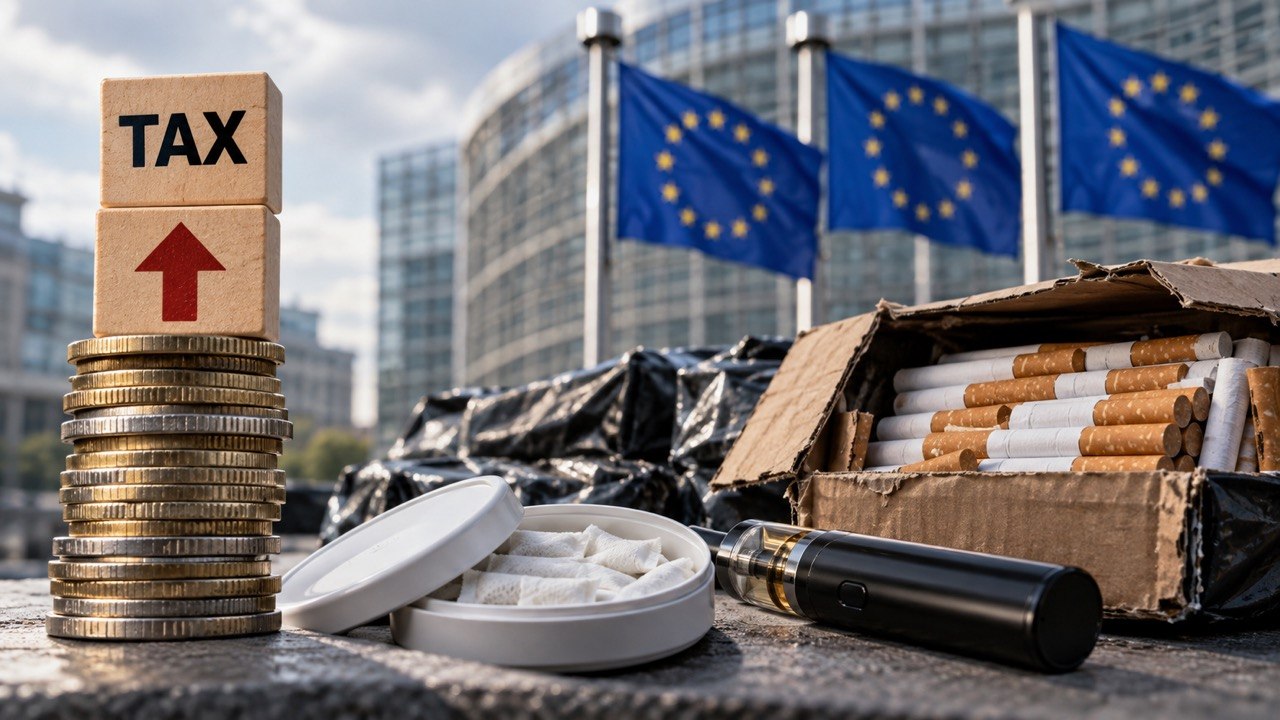
This happens when, instead of ceasing to smoke, people merely switch to illicit alternatives. This is currently happening in Europe. For example, while cigarette sales declined drastically in the UK since 2021, the number of smokers declined only moderately – while the number of cigarettes a smoker consumes remained stable. That people are smoking at similar rates while buying fewer cigarettes in places where the government keeps track invites one plausible explanation: they are buying cigarettes on the black market.
It comes as no surprise that even the European Court of Auditors disagrees with the European Commission, fearing higher taxes could push people into the black market. Cheap suppliers of illicit cigarettes include Russia.
Studies find that while on average in Europe, countries with higher cigarette prices have less illicit retail trade, rising prices are associated with increased illicit trade in one country. One explanation for these conflicting results is that countries with higher cigarette prices are further away from cheap suppliers and rely on other measures to keep illicit trade in check.
In any case, it is doubtful Europe will become smoke-free through price hikes alone. The EU would instead do well to learn from Sweden’s success. Sweden did not rely on tax hikes alone, but offered legal alternatives to smoking. Many of Sweden’s smokers have simply switched from cigarettes to snus or nicotine pouches – which carry lower health risks. Swedes who use snus also have a lower risk of becoming smokers and a higher chance of stopping if they already smoke.
The EU should not undermine the factors behind Sweden’s success. Unfortunately, its policies may do exactly that. Failure affects our whole society. After all, more consumers switching to the black market may also mean more revenue for criminal gangs that are increasingly turning to illicit smuggling of tobacco and nicotine products. Illegal markets persist despite efforts to crack down on them and hold a share of about 10 percent of global cigarette consumption. Since 82.5% of smokers say lower prices are the main reason to smoke black-market cigarettes, higher taxes may only push more people into illicit trade, especially when alternative products become more expensive as well.
Many believe regulation can steer society where we want it to go. Rent controls will lower rents, they say. Price caps will make groceries more affordable. But very often, these approaches fail. People are not just passive followers of government directives – they are autonomous agents who adapt their behavior to changing environments. We can’t just tell people what to do. It doesn’t work.
If European politicians want people to stop smoking, they should follow the example of countries which have succeeded in this task. Places like Sweden did so by making it easier, not harder, for people to switch to healthier alternatives. Higher prices on alternative nicotine products will not make people quit using them. Instead, it will boost the black market in yet another area. The EU should rely more on policies that offer smokers legal and affordable alternatives.
Cover photo credit: AI-generated visual created with OpenAI for CEA Magazine

Michael Haiden is a research associate and PhD student at the University of Hohenheim. He is a writing fellow with Young Voices, specialising in European politics and policy.
