
Why range extender technology may be the most effective successor to large petrol and diesel engines in real off road vehicles, with the iCAUR V27 showing how this concept can work under extreme conditions.
Author: Szilárd Szélpál
For decades, the classic off roader has been defined by large engines, mechanical strength and the ability to keep moving where ordinary vehicles stop. V8 petrol engines and large displacement diesel engines became symbols of this category because they offered torque, endurance and long range confidence. In the world of traditional four wheel drive vehicles, those qualities mattered more than refinement, efficiency or emissions.
The problem is that the conditions around the off road vehicle have changed. Urban use has become more important, fuel economy matters more, emissions regulations are tightening, and customers increasingly expect comfort, safety and intelligent assistance systems even from vehicles designed for rough terrain. At the same time, true off road capability cannot be replaced by marketing language. A real off roader still needs torque, control, durability, underbody protection, long distance usability and confidence in remote environments.
This is where REEV technology becomes strategically important. A Range Extended Electric Vehicle is not simply a compromise between a combustion vehicle and a full battery electric vehicle. In the right application, it can become one of the most logical powertrain architectures for modern off road vehicles. It offers the immediate torque and precise control of electric drive, while retaining the long distance flexibility of an onboard generator. For classic off road use, that combination may be more relevant than either a conventional engine or a pure battery electric platform.
The iCAUR V27 provides a strong example of this direction. It is not only a new energy SUV positioned for global markets. It is also a vehicle whose safety and durability claims are supported by broad validation, including more than 1,000 test vehicles, millions of kilometres of data, more than 50 test items, and testing across environments ranging from minus 40 degrees Celsius in Heihe to more than 50 degrees Celsius in Turpan. Its development also included high altitude testing on the Qinghai Tibet Plateau and high speed validation on Germany’s unrestricted autobahns.
That matters because the future of the off roader will not be decided in perfect laboratory conditions. It will be decided in cold starts, desert heat, mountain passes, gravel roads, deep traffic, long journeys and remote regions where reliability is not optional.

Why traditional off road powertrains are under pressure
The traditional off road formula is easy to understand. A large petrol or diesel engine delivers torque through a mechanical drivetrain, often combined with four wheel drive, locking differentials, low range gearing and robust suspension. This architecture has proved itself for decades. It is durable, familiar and effective in demanding conditions.
But it also has clear weaknesses.
Large petrol engines offer power and smoothness, but they are thirsty in urban use and under low speed load. They can be highly capable off road, but their fuel consumption becomes a serious drawback in everyday driving. Large diesel engines deliver strong low end torque and long distance efficiency, but they are increasingly challenged by emissions regulations, complex exhaust aftertreatment systems and changing urban access rules.
Both architectures also carry mechanical complexity. Engine, gearbox, transfer case, driveshafts, differentials, cooling, exhaust systems and emissions controls all have to work under load. In heavy off road use, this can be an advantage because the systems are familiar and repairable. But in modern markets, it also means weight, fuel consumption and regulatory pressure.
This creates a clear engineering question. Can a modern off roader preserve the strengths of the classic V8 or large diesel, while reducing their weaknesses?
REEV technology gives one of the most convincing answers.
What makes REEV different from other electrified systems
A conventional hybrid uses an electric motor to support a combustion engine. It can improve efficiency, especially in city traffic, but the engine remains a central part of propulsion. The vehicle still depends heavily on mechanical drive, and electric operation is usually limited.
A plug in hybrid goes further by allowing external charging and longer electric driving. However, many plug in hybrids still use the combustion engine to drive the wheels in certain conditions. This gives flexibility, but it also creates complexity. The vehicle must manage two propulsion systems, and the real world benefit depends heavily on whether the driver charges the battery regularly.
A full battery electric vehicle offers instant torque, quiet operation and excellent mechanical simplicity at the point of propulsion. For urban driving and regions with strong charging infrastructure, it can be highly effective. But for classic off road applications, a pure battery electric vehicle faces practical questions. Range can fall under cold weather, heavy load, high speed travel, towing, steep climbs or remote use. Charging access can also become a limitation in rural or wilderness environments.
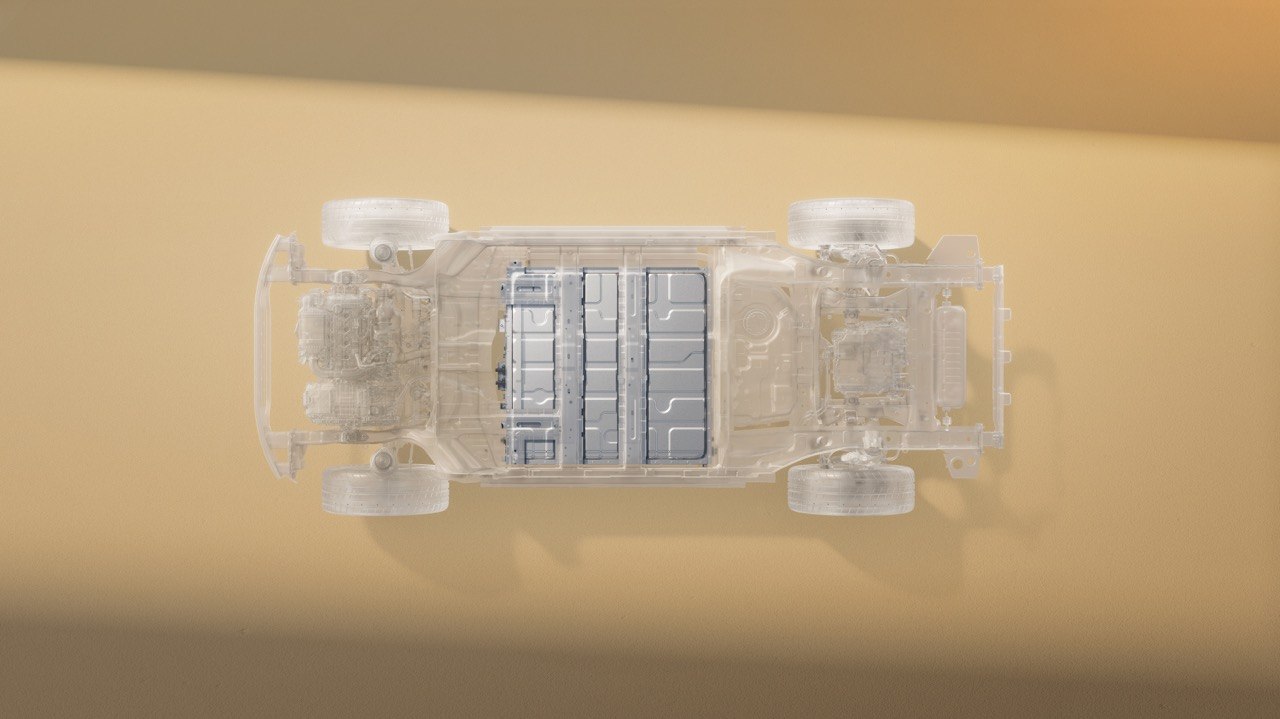
REEV technology takes a different approach. The wheels are driven by electric motors, while the combustion engine functions mainly as a generator. This means the vehicle drives like an electric vehicle, but it can continue operating over long distances without depending entirely on external charging infrastructure.
For an off roader, this distinction is crucial.
Electric drive provides immediate torque. That is valuable in low speed off road conditions, where smooth control is often more important than peak horsepower. Rock crawling, steep climbs, mud, snow, sand and technical trails all benefit from precise torque delivery. Unlike a traditional engine, an electric motor does not need revs to build usable pulling force. It can deliver strong response from the start.
At the same time, the range extender provides endurance. It gives the vehicle long distance confidence in areas where fast charging may not exist, may be unreliable, or may be inconvenient. This makes REEV especially attractive for drivers who want one vehicle for city driving, long highway trips and real off road use.
Why REEV may be ideal for classic off road vehicles
The strongest case for REEV technology appears in vehicles that must perform in very different environments.
A classic off roader is rarely used only in the wilderness. Many owners drive it daily in cities, use it for commuting, take it on highways, travel long distances, and only sometimes demand its full off road capability. This mixed use profile exposes the weakness of traditional large engines. They may be excellent in demanding terrain, but inefficient in everyday urban driving.
REEV technology can solve this contradiction.
In city driving, the vehicle can rely heavily on electric propulsion, reducing fuel use and improving smoothness. Stop and go traffic, low speed driving and short daily trips are exactly the conditions where electric drive is most efficient and most pleasant. Instead of a large petrol or diesel engine running inefficiently through urban congestion, the vehicle can move with the quiet and controlled character of an electric drivetrain.
Off road, the same electric drivetrain becomes an advantage for a different reason. The instant torque supports controlled movement over difficult terrain. Electric motors can deliver power with precision, making it easier to manage traction and vehicle balance. This is particularly important in technical off roading, where too much throttle can break traction and too little can stop progress.
On long journeys, the range extender becomes the key advantage. A pure battery electric off roader may be excellent where charging is available, but long distance travel through remote areas still requires planning. A REEV reduces that limitation. It offers the electric driving experience while preserving the ability to continue travelling when charging infrastructure is weak.
This is why REEV can be seen as a credible successor to the classic V8 petrol engine and the large diesel engine. It does not simply replace displacement with a battery. It replaces the old logic of mechanical power with a more flexible energy system. Electric motors provide the torque and control. The generator provides long range confidence. The battery provides efficiency and response. Together, they can match the diverse demands of a modern off roader more intelligently than a single traditional engine.
Can REEV replace V8 petrol and large diesel engines?
The answer is not that every V8 or diesel off roader will disappear overnight. Traditional engines still have strengths, especially in markets where fuel quality, service infrastructure and repair simplicity matter more than emissions or urban efficiency.
But from a technical and usage based perspective, REEV is one of the strongest candidates to replace large combustion engines in classic off road vehicles.
It can replace the V8’s emotional promise of strength with electric torque that is available instantly. It can replace the diesel’s long range confidence with a generator supported electric system. It can improve urban fuel economy without making the vehicle dependent only on charging infrastructure. It can support long trips without forcing the driver to plan every stop around chargers. It can also allow engineers to design a vehicle around the advantages of electric propulsion without giving up the endurance expected from an off road platform.
For traditional off road vehicles, this is not a minor improvement. It is a change in the powertrain philosophy.
The old formula was simple. A large engine produced force, and the mechanical drivetrain distributed it. The REEV formula is different. Electric motors provide controlled propulsion, while the onboard generator secures energy continuity. This can make the vehicle more adaptable across different conditions.
That adaptability is exactly what a modern off roader needs.
The V27 as a serious demonstration of this logic
The iCAUR V27 is important because it places this concept in a vehicle category where durability matters. A REEV off roader cannot rely only on the promise of electric torque or long range. It must prove that its battery, body, safety systems and electronic architecture can survive real world stress.
According to the product material, the V27 was developed to meet mainstream global five star safety benchmarks. It uses a Star Armor cage type body structure with 76.53 percent high strength steel and aluminium alloy materials. The purpose is to preserve occupant survival space in crash incidents and provide a strong structural foundation for the vehicle.
This is particularly important in a new energy off roader. The vehicle does not only need to protect passengers. It also needs to protect the high voltage system, battery pack and key electric components under impact and rough road conditions.
The V27 also includes a far side airbag, which remains rare in its class, and side curtain airbags with pressure holding time of more than six seconds. That is relevant in rollover situations, where protection must be sustained beyond the first moment of impact.
In traditional off road vehicles, body strength has always been part of credibility. In a REEV off roader, it becomes even more important because structural safety and electric safety are closely connected.
Battery durability is the foundation of REEV confidence
Any electrified off road vehicle must answer one central question. Can the battery survive the conditions in which the vehicle is expected to operate?
The V27 uses CATL lithium iron phosphate battery technology. LFP batteries are widely associated with thermal stability and durability, which makes them especially relevant for vehicles expected to operate under stress. The V27’s battery pack also features a six layer protective structure at the bottom and double layer aluminium extrusions on the sides. These features are intended to cushion impacts from rugged and gravel roads.
This is a critical point for off road use. In a conventional vehicle, underbody damage can be serious. In an electrified vehicle, battery pack protection is even more important. Stones, ruts, uneven surfaces and impacts from below can create risks if the battery is not properly shielded.
The V27 also uses a Battery Management System that monitors voltage, temperature and pressure in real time. This is not only a safety feature. It is part of long term durability. A strong BMS can detect abnormal conditions early and help prevent small problems from becoming critical failures.
In a REEV platform, battery protection is central because the vehicle’s main driving character depends on electric propulsion. The range extender reduces range anxiety, but the battery remains the heart of the system.

Tested for extremes, not just ordinary use
The V27’s global testing programme is one of the strongest parts of its durability story.
Testing from minus 40 degrees Celsius to more than 50 degrees Celsius matters because electrified systems are highly sensitive to thermal conditions. Cold weather challenges battery performance, charging behaviour, seals, materials, electronics and cabin energy consumption. Severe heat challenges cooling systems, power electronics, battery protection and sustained operating stability.
The high altitude Qinghai Tibet Plateau adds another layer of stress. Thin air, long climbs, changing temperatures and demanding roads can expose weaknesses in energy management and system calibration. For a REEV, this is especially relevant because the battery, electric drive and range extender must work together under conditions that are far from ordinary city driving.
Germany’s unrestricted autobahns test a different type of durability. High speed driving creates sustained thermal load, braking demand and stability requirements. A vehicle that performs well briefly is not the same as one that remains controlled under prolonged stress.
For a classic off roader successor, this testing profile is important. A vehicle meant to replace large petrol or diesel engines must not only be efficient. It must be trusted. It must operate in heat, cold, altitude, high speed travel and rougher road conditions. The V27’s development programme directly addresses this credibility question.
Intelligent safety as part of real world endurance
Durability is not only mechanical. A modern off roader must also help prevent accidents in complex road environments.
The V27 is equipped with an L2 driving assistance system designed for scenarios such as narrow lane passing, congested merging, mixed traffic flow and unprotected turns. Its Autonomous Emergency Braking system is calibrated for everyday driving speeds from 40 to 80 kilometres per hour, with the ability to respond to sudden hazards such as children entering the road or abrupt braking by vehicles ahead.
This matters because many off road capable vehicles spend much of their time in cities and on public roads. A modern REEV off roader must therefore be safe not only on trails, but also in traffic. It must combine rugged capability with intelligent accident prevention.
This is another reason why REEV makes sense in this category. The vehicle can be efficient and smooth in the city, capable off road, confident on long trips and supported by active safety systems in everyday use.
The strongest use case for REEV is the modern off roader
The REEV architecture is not necessarily the best answer for every vehicle type. A small city car may work better as a pure battery electric vehicle. A simple low cost vehicle may still rely on conventional combustion. A driver with excellent home charging and short predictable routes may not need a range extender.
But for a full size or adventure oriented off roader, REEV has a uniquely strong argument.
It offers electric torque for real off road capability. It offers urban efficiency for daily use. It offers long distance confidence for travel. It reduces dependence on charging infrastructure. It allows a vehicle to remain useful in regions where climate, terrain and infrastructure vary widely.
This combination directly addresses the weakness of classic V8 petrol and large diesel off roaders. Those engines are strong, but inefficient in cities. They are durable, but increasingly challenged by emissions rules. They are familiar, but less aligned with the direction of global mobility.
REEV can preserve what owners value most in traditional off road vehicles while improving what traditional engines do least well.
It can keep the confidence, torque and endurance. It can reduce the everyday penalty in fuel consumption. It can make electrification more realistic for drivers who are not ready to depend fully on charging infrastructure.
Conclusion: the off roader may be where REEV makes the most sense
The future of the off roader should not be reduced to nostalgia for large engines or a forced move to pure battery electric platforms. The category needs a powertrain that can respect what made classic off road vehicles useful while solving the problems that make them harder to justify today.
REEV technology may be that powertrain.
It gives electric torque for difficult terrain. It gives efficient urban operation for daily driving. It gives long range flexibility for travel. It gives manufacturers a way to electrify serious off road vehicles without asking customers to give up the endurance and confidence they expect from the category.
The iCAUR V27 shows how this approach can be made credible. Its range extender concept is supported by a safety focused body structure, CATL LFP battery technology, multilayer battery protection, real time battery monitoring, intelligent assistance systems and a global validation programme across extreme cold, extreme heat, high altitude and high speed driving.
The question is no longer whether REEV is merely a compromise. For classic off road vehicles, it may be one of the most complete answers available.
If the V8 petrol engine and the large diesel engine defined the old off roader, the range extended electric drivetrain may define the next one.
Cover photo: iCAUR

Szilárd Szélpál served as an environmental expert in the European Parliament from 2014, where he utilized his expertise to influence policy-making and promote sustainable practices across Europe. In addition to his environmental work, Szilárd has a deep understanding of foreign affairs, offering strategic advice and contributing to the development of policy initiatives in this field.
Support independent analysis and journalism at CEA Magazine: https://centraleuropeanaffairs.com/donation
For more insights on Central European political risk, EU institutional developments, and transatlantic relations, follow CEA Magazine and the CEA Talk podcast.

Your blog is a treasure trove of valuable insights and thought-provoking commentary. Your dedication to your craft is evident in every word you write. Keep up the fantastic work!