
If Viktor Orbán were to become UN Secretary-General, would it be a diplomatic triumph for Hungary—or the ultimate reward for years of serving other powers’ interests at the expense of his own country?
Author: Mihály Barcza
Viktor Orbán’s silence nomination to a very high level UN position is neither new news nor an unexpected event if it happened. And following the Matolcsy’s arrest who served as the former chief of the National Bank of Hungary. It’s quite clear that if Orban wants to avoid prison, there’s only one way which is nuclear: to leave his homeland. He can do this as a petty, in Kun BélaS style, the leader of the Hungarian communist commune in 1919, as his son-in-law István Tiborcz did, or he can do it as a high-profile criminal, as Orbán plans to.
More precisely, as allegedly planned for him by Trump, Putin, and Xi—who, especially Trump and Putin have done their best so far to keep him in power against the will of his own people and nation, and who have recognized, accepted and relied on this assistance. It was primarily Trump and Putin who tried the held the steering wheel steady from both sides when Orban was already slipping out of his driving seat. And now they are once again offering him a lifeline, which goes by the name of “diplomatic immunity for the family.”
And the list is long. At least as far as various forms of American “assistance” are concerned. Ferdinand Marcos, Saddam Hussein, Reza Pahlavi, the Shah of Iran. Each enjoyed the U.S.’s genuine—or symbolic—hospitality. Just as Kim Ir Sen and Fidel Castro enjoyed the Soviets’ “help”. To avoid any misunderstandings: I’m not calling Orbán a dictator; in the personal examples above, the analogy isn’t based on the person, their character, or their political status, but on the fact of great-power interference.
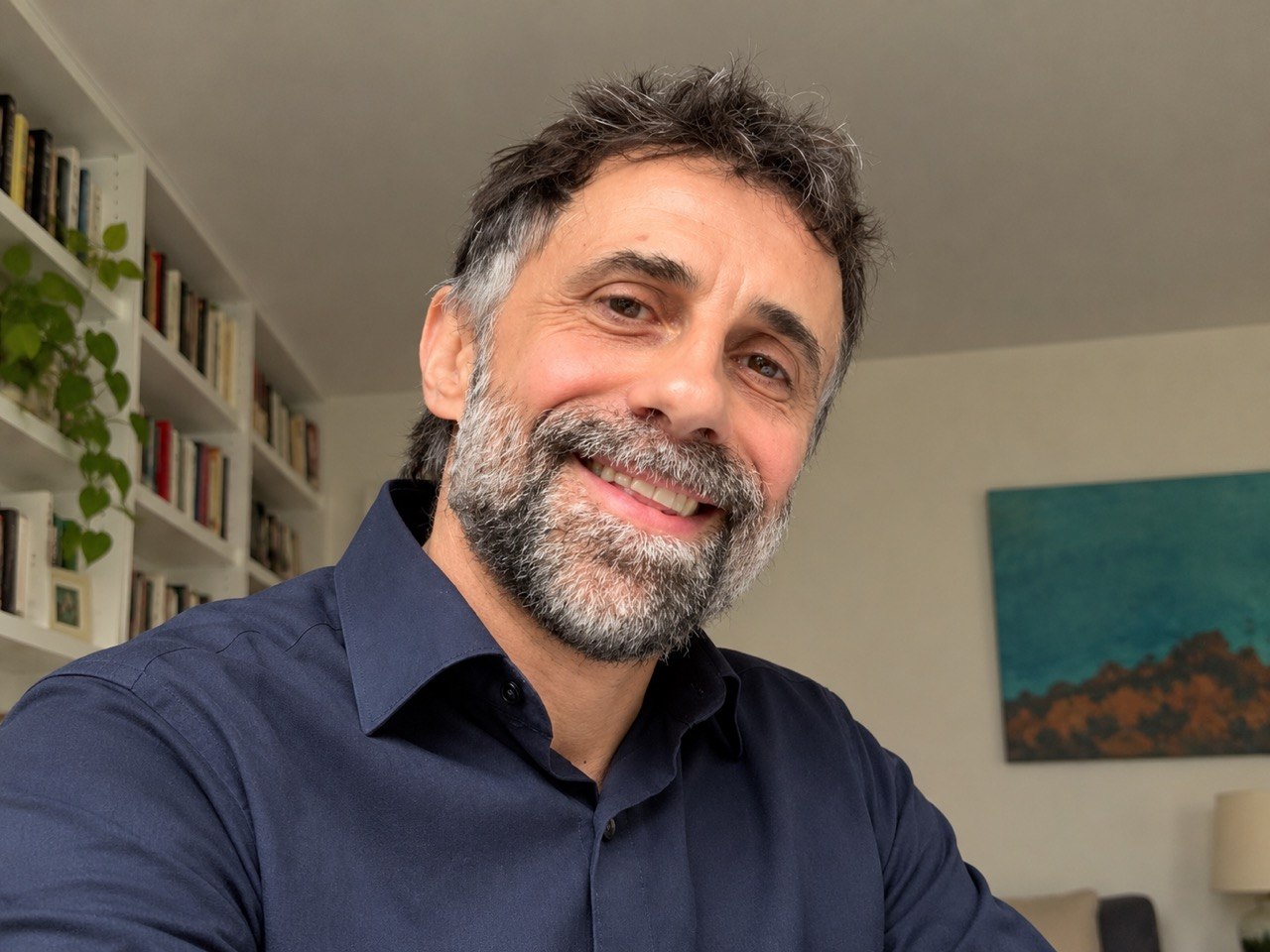
In fact, the only group that’s grimacing is the one he belongs to. In theory at least. The EU. This secretary-general position is like eighth-graders choosing that lower-grade student from Class 4/b—the one everyone hates but fears to some extent because he’s the eighth-graders’ buddy—to be the patron of the annual school dance party.
I’ve written here several times in my posts that one of the Orban era’s greatest sins was that the national interest and Orbán’s personal ambition switched places. For 16 years, we lived under a regime that served, at an ever-accelerating pace, a goal whose name was not “the Hungarian national or public interest,” but rather “what Viktor Orbán considers to be the Hungarian national or public interest.” And personal ambition certainly played an increasingly prominent role in this. Orbán has placed Hungary—this small, aging country with defenseless borders—at the crossroads of tectonic fault lines in global politics, all for the sake of his personal ambition. He recognized that the world order is changing and aligned himself with those who are reshaping the world.
What he failed to realize, however, is that they are starting this reshaping with us. Because both Trump and Putin are pushing to weaken (or eventually dismantle) the EU. This is now completely obvious. We are a competitor to the U.S. And we are a target of Russian imperial interests and as a strong EU, we may serve a not unfounded cause of a Russian West phobia. Orbán has served and continues to serve these interests. Not on purpose. But as a tool in the hands of others.
For this, he deserves the title of proconsul. Above and over the clouds. And away from the dark ones. And—if he is indeed elected—let’s try to find the sunny side in it. Even if it’s not easy. After all, a Hungarian will then hold a significant international seat—even today, in an era marked by the dismantling of the rule of Law and a U.S. administration led by an unpredictable business shark. A seat where the horizon of his political carrier may also be weighed on the final scales.
Because if he was elected as UN Secretary-General, it doesn’t just mean that Bertalan Havasi, his PA, and a few other hangers-on will keep their retirement jobs; it could also be a test of what he does about the migration pressure weighing on us from Africa and the Middle East. If, as UN Secretary-General, he can substantially alleviate the migration pressure increasingly weighing on Europe, then his life will not have been in vain from our perspective. And then he can help repair the damage caused by the scandal in which he let himself used as a tool to dismantle the EU our home, as a factor and player in global politics and the global economy.
But if I were a believer in conspiracy theories, I’d think that the WSJ is aware from a reliable source that Orbán will become UN vice president—or perhaps be given some other high-ranking position there. And that’s why it dropped the news about the UN presidency in an opinion – so that the vice-presidential appointment could be portrayed later as a failure. Not just as a failure of Orbán’s presidential nomination, but as a failure of Trump’s proposal.
But I’m not a believer in conspiracy theories.
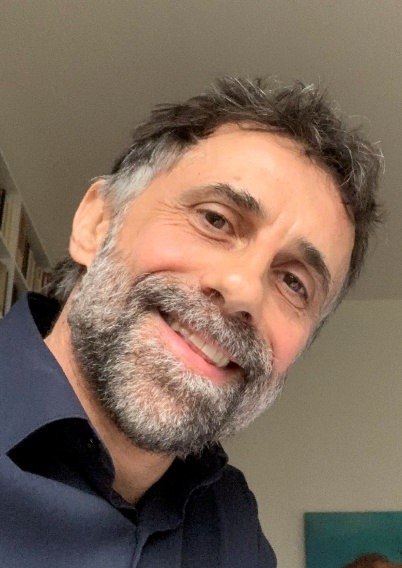
Mihály Barcza is an attorney and founding partner of Oppenheim Attorneys-at-Law, specialising in international mergers and acquisitions. Throughout his career, he has advised leading European, American and Asian companies on major cross-border transactions. He also served as an arbitrator in money and capital market disputes for 17 years and chaired the Supervisory Board of MKB Bank between 2015 and 2017. His work has been recognised by leading international legal rankings, including Chambers Global and The Legal 500.
Cover photo credit: Mihály Barcza
Support independent analysis and journalism at CEA Magazine: https://centraleuropeanaffairs.com/donation
For more insights on Central European political risk, EU institutional developments, and transatlantic relations, follow CEA Magazine and the CEA Talk podcast.
