
The Paris Motor Show kicks off tomorrow, October 12, with its press day, presenting a rather interesting picture of the state of the European automotive industry this year. While traditional manufacturers such as BMW, Mini, and Jaguar Land Rover are staying away, twenty Chinese brands are appearing at the exhibition—twice as many as two years ago. Stellantis, meanwhile, is bringing eight brands, more than sixty vehicles, and the largest stand at the show. One of the most interesting new arrivals is the new Lancia Gamma; its debut offers a good opportunity to revisit a long-standing debate in car manufacturing: is the use of shared platforms merely a case of badge engineering, or is this the very strategy that can help keep historic European brands alive?
Author: Szilárd Szélpál
This year’s Paris event is remarkable for its list of exhibitors alone. Chinese manufacturers are claiming an increasingly significant foothold, and they are no longer trying to break into the European market solely with cheap electric cars. Alongside BYD and Chery, names less familiar in our region such as Aito and Avatr, are also appearing, with the Chinese lineup covering almost every category from small cars to premium SUVs. Their technological progress is striking; they are developing rapidly and offering an increasing number of models that pose a serious challenge to traditional European players in terms of price, equipment, and quality.
Naturally, the European Union is attempting to curb this expansion. However, the additional tariffs imposed in 2024 on purely electric cars manufactured in China do not apply to conventional or plug-in hybrids—a loophole Chinese manufacturers were quick to exploit. They have significantly ramped up hybrid exports recently, prompting Brussels to prepare restrictions for these vehicles as well. During EU–China negotiations on October 9, a preliminary agreement was reached to halve Chinese hybrid exports, although the details and implementation remain to be finalized. All this clearly demonstrates that competition in the automotive industry today is as much about trade policy and production costs as it is about the cars themselves.
Against this backdrop, Stellantis’s prominent presence in Paris is particularly noteworthy. Its stand, spanning over 5,300 square meters, showcases not only Peugeot, Citroën, Opel, Fiat, Alfa Romeo, DS, and Lancia but also the Chinese brand Leapmotor. The DS N°7, the Fiat Grizzly and Grizzly Fastback, and the new Lancia Gamma are all products of the same major automotive group, with several of them built on largely shared technology. Stellantis, therefore, does not attempt to create a completely independent technical ecosystem for each of its brands; instead, it relies on shared development to offer the widest possible range of vehicles. This is what makes the Gamma’s appearance in Paris so interesting.
Is It Really Just Badge Engineering?
The term “badge engineering” has long been used in the automotive industry to describe situations where a manufacturer sells essentially the same car under multiple brand names. In the classic scenario, only the grille, the badge, a few exterior details, or the equipment levels change, while the car itself remains virtually identical. Platform sharing is a far more complex process, involving the creation of models with varying sizes, designs, and characters based on shared technical foundations. In such cases, the powertrain, electronic systems, and numerous structural components may be identical, while the bodywork, interior, suspension tuning, and driving experience can differ significantly.
All of this is entirely standard practice in modern car manufacturing. Developing a new electric platform, along with the associated batteries, software, safety systems, and powertrains, incurs such high costs that even the largest companies cannot afford to develop every model from scratch. Furthermore, shared technology simplifies production, can reduce component procurement costs, and makes it easier to allocate model production across different manufacturing plants. The real question is how much manufacturers are willing and able to add to a shared platform, and whether buyers can actually feel the difference. After all, we rightly expect more from a significantly more expensive car than just a nicer badge on the hood.
Incidentally, this debate is almost as old as multi-brand car manufacturing itself. Using shared technical foundations was already common practice a century ago, and there have been plenty of both successful and less successful attempts since then.
General Motors Figured This Out a Century Ago
In the 1920s, under the leadership of Alfred P. Sloan, the American company General Motors established a brand hierarchy that defined the workings of the US automotive market for a long time. Chevrolet represented affordable cars; Pontiac and Oldsmobile aimed slightly higher; Buick was the choice for greater comfort and prestige; and Cadillac stood for luxury. A major advantage of this system was that as customers’ financial situations improved, they could move up to more expensive vehicles while remaining within the General Motors fold. Thus, the brands represented not merely different price points, but also distinct social statuses, tastes, and consumer expectations.
Over time, GM even attempted to fill the gaps between its existing brands, leading to the creation of marques such as LaSalle, Marquette, and Viking. Most of these disappeared relatively quickly, simply because there were too many brands competing in similar segments. Nevertheless, the multi-brand system remained highly successful for a long period, though the company eventually learned the damage that could result when there was insufficient genuine differentiation behind the various badges. One of the most notorious examples of this was the Cadillac Cimarron, introduced in 1982; it was a close technical sibling of the Chevrolet Cavalier, intended to help Cadillac compete with smaller European premium cars. However, the Cimarron failed to convince buyers that it was worth the higher price tag. The Cadillac badge and the trim levels intended to convey a more premium feel proved insufficient, as the car’s fundamental characteristics were too reminiscent of the cheaper Chevrolet. To this day, the model remains one of the most notorious examples of a botched badge-engineering exercise, even though the underlying idea that Cadillac needed a smaller car, was not bad at all. The real issue was that the final product fell short of what customers expected from the brand.
The British Were at It Early On, Too
British automakers employed similar strategies, particularly those lacking the massive development budgets of American giants. The Rootes Group, for instance, offered closely related vehicles under the Hillman, Singer, Sunbeam, and Humber brands. The “Arrow” model range of the 1960s exemplified this practice: ordinary family cars, more elegant sedans, and sportier variants were all derived from the same technical platform. While the differences were not always substantial, each brand sought to appeal to its own specific customer base a highly practical approach for a smaller manufacturing group.
The British Motor Corporation took this concept even further. Introduced in 1962, the ADO16 was sold under the Austin, Morris, MG, Riley, Wolseley, and Vanden Plas badges, and remained one of Britain’s most popular cars for years. However, the subsequent history of British Leyland also illustrates the difficulty of sustaining a multitude of overlapping brands when funds for new models are scarce and production is plagued by mounting problems. Of course, the decline of the British automotive industry cannot be attributed solely to badge engineering; labor disputes, quality issues, flawed management decisions, and a lack of investment all played a role. Yet, it was evident that the various brand names alone could not offer a solution to these problems.
And Now, Let’s Look at Volkswagen!
Over the past few decades, the Volkswagen Group has arguably leveraged the potential of shared platforms better than any other manufacturer. The Volkswagen Golf, Audi A3, Škoda Octavia, and the SEAT and Cupra León have long been built on shared technical foundations, yet they cater to distinct customer needs. Škoda focuses on practicality, spaciousness, and value for money; Volkswagen represents the balanced family car; Cupra offers a sportier character; and Audi aims to satisfy premium aspirations. Naturally, the differences between some models aren’t always as pronounced as their price tags might suggest, but buyers generally have a clear understanding of what each brand offers.
This shared development strategy is even more evident with the new electric models. The Škoda Epiq and Volkswagen ID. Cross are two SUVs from the same new family of small electric cars, just as the Cupra Raval and Volkswagen ID. Polo are close technical relatives. All four vehicles are built on the Volkswagen Group’s MEB+ architecture and share numerous components, battery technologies, and electronic systems. Moreover, the Raval and ID. Polo are manufactured at the same plant in Martorell, Spain, despite their differing designs and brand positioning. The situation is similar with the larger electric SUVs: the Škoda Elroq and the new Volkswagen ID. Tiguan both belong to the broader MEB platform family, although the vehicles are not identical in terms of size or design.
With this approach, Volkswagen has established a highly effective industrial system that enables the maintenance of a broad model lineup at relatively reasonable costs through shared development. Moreover, this leaves the brands with greater scope to focus their resources on areas such as exterior styling, interior design, equipment levels, and driving characteristics. And while platform sharing at Volkswagen does occasionally draw criticism, the general perception remains far more favorable than that of Stellantis’s similar practices, even though the underlying logic of production and development is essentially the same.
For Lancia, It’s About More Than Just a New Model
Stellantis’s situation is, of course, more complex, as the group brings together French, Italian, German, British, and American brands with vastly different heritages. Peugeot, Citroën, Fiat, Opel, Alfa Romeo, DS, Jeep, and Maserati each possess their own history and character, yet several of them would likely struggle to independently finance full-scale model development. Consequently, the use of shared platforms is crucial for Stellantis; furthermore, it offers a new lease on life to brands that had previously all but vanished from the European market.
Lancia is perhaps the best example of this. Now 120 years old, the Italian brand was once a fascinating player in the European automotive industry, with models like the Lambda, Aurelia, Flaminia, Fulvia, Stratos, 037, and Delta Integrale still holding a special place in the memories of car enthusiasts. For decades, Lancia was renowned for bold engineering, elegant design, and rally successes, before gradually losing its market standing. Its model lineup shrank, and for a long time, the brand was kept alive essentially by the Ypsilon, sold primarily in Italy. Staging a comeback based on independent development would have been an extremely costly and risky undertaking.
However, by leveraging shared technology, Stellantis can rebuild Lancia’s European product range. The new Ypsilon was built on a shared technical platform with the Peugeot 208 and Opel Corsa, and now the Gamma is arriving, a model designed, developed, and manufactured in Italy. Produced at Stellantis’s Melfi plant, the new model is built on the same STLA Medium architecture used by the Peugeot 3008, DS N°7, and the new Jeep Compass. The versions showcased in Paris will include the 145-hp Gamma LX Hybrid, the all-electric LX, and the 375-hp, all-wheel-drive HF Integrale, a model with which Lancia aims to evoke its sporty heritage.
Of course, the Gamma no longer represents the world of traditional Lancia sedans; instead, it is a coupé-like crossover tailored to modern consumer preferences. In my view, this is not a problem in itself, as the market has changed, and this is the category where significant sales volumes can truly be achieved today. What matters far more is the extent to which Stellantis can use this shared platform to create a car that embodies Lancia’s traditional values. Features such as refined suspension, a quiet cabin, comfortable seats, and an elegant yet understated interior could all serve to distinguish the Gamma from its sibling models. Just how successfully this has been achieved will become clear during the first major test drives.
However, the very fact that Lancia is preparing to unveil such a model and aims to establish a presence in multiple European countries once again, is highly significant. The shared STLA Medium platform plays a pivotal role in this, as the brand does not need to develop a completely new technical foundation from scratch. In this respect, Stellantis’s strategy is a means of reviving Lancia rather than abandoning its traditions.
Even Autobianchi Could Make a Comeback
There is another, lesser-known but highly intriguing chapter in Stellantis’s plans for its Italian brands. In recent months, the Italian automotive press has frequently reported on a special edition dubbed the “Fiat Pandina Tributo Autobianchi,” with camouflaged prototypes spotted during road tests. Plans suggest that the Pandina (based on the outgoing Panda generation) could feature Autobianchi badging, unique colors, distinct interior details, and potentially even a canvas roof. Mechanically, however, it is expected to remain essentially the standard Pandina; in other words, this would be a classic case of badge engineering.
Nevertheless, the history of Autobianchi makes this story noteworthy. Founded in 1955, the brand gave the Italian automotive industry models such as the Bianchina, Primula, A112, and Y10, the latter of which was later sold as a Lancia in several markets. Autobianchi eventually faded away, and the brand name has been absent from the new mass-production car market for decades. A Pandina-based special edition would obviously not signal a full-scale revival of the brand, but it would at least bring the name back into the public eye, and a small car that would feel entirely at home in Autobianchi’s history.
A peculiar piece of Italian legislation also plays a role in this story. The “Made in Italy” law adopted in late 2023, along with the 2024 regulations governing its implementation, enables the Italian state to acquire (under specific conditions) brands of national significance with a history spanning at least fifty years. State intervention may arise in cases where companies permanently cease production or where trademarks have remained unused for at least five years. The objective is to prevent historic Italian brands from disappearing entirely and to allow them to be utilized by enterprises intending to manufacture or invest in Italy.
Moreover, the Italian government had previously shown specific interest in the Autobianchi and Innocenti names. As early as July 2024, Reuters reported that Italian authorities might offer these dormant brands to new manufacturers setting up operations in Italy, including Chinese companies. This is naturally a matter of concern for Stellantis, given that Autobianchi, through its historic ties to Fiat and Lancia, forms part of the group’s Italian heritage. While the legislation does not entail automatic state seizure of brands, and it remains unclear whether this directly spurred the development of the Pandina special edition, the connection between the two developments is certainly noteworthy. If the Pandina Tributo Autobianchi actually makes it to market, it is unlikely to become a new automotive legend—nor is that its intended role. Nevertheless, a relatively simple model based on existing technology could help preserve a historic Italian brand name that might otherwise disappear from public memory. Moreover, this could be achieved without significant development costs. In my view, such a special edition makes perfect sense for precisely this reason, even if it offers nothing revolutionary in terms of engineering.
A Lancia Built on a Shared Platform Is Better Than No Lancia at All
Naturally, Stellantis’s platform strategy can and should be critically examined. Buyers rightly expect a premium DS, Alfa Romeo, or Lancia to offer more than what they could get more cheaply in a Peugeot or Fiat based on shared technical underpinnings. The group must therefore ensure that individual brands truly retain their distinct characters and that this distinction goes beyond mere body styling, a few interior details, or marketing. However, this can be achieved through proper development and product design even on shared platforms, as other manufacturing groups have long demonstrated.
In the current market climate, it is also worth considering the alternatives available to manufacturers. Due to the expansion of Chinese car brands in Europe, increasingly costly development, regulatory changes, and shifting consumer habits, many traditional European brands face a far more difficult situation than they did even ten or fifteen years ago. Fully independent development requires massive sales volumes—figures that a smaller brand, or one currently undergoing a revival, cannot necessarily guarantee. If a company can maintain its model lineup, preserve jobs, and keep historic brands alive by utilizing shared components and platforms, I believe that is something to be appreciated. This is particularly true for Stellantis, where brands such as Peugeot, Citroën, Opel, Fiat, Alfa Romeo, DS, and Lancia are backed by vastly different automotive traditions. These brands represent not merely different badges, but decades of development, design, and motorsport success, along with countless models that have been part of people’s lives across generations. Clearly, it is impossible to maintain all of them in their original form, nor do I believe that every historic brand necessarily requires an independent future. However, where a comeback is feasible and where shared development makes it economically viable, it is worth the attempt.
The Paris Motor Show, opening tomorrow, will be interesting from this perspective as well. Twenty Chinese brands will aim to demonstrate their growing ambitions in the European market, while traditional manufacturers attempt to counter this challenge with new models and strategies. For Stellantis, the unveiling of the Lancia Gamma, the expansion of the DS lineup, new Fiat models, and the partnership with Leapmotor all indicate that the group is pursuing growth across multiple fronts. A shared technological foundation obviously plays a key role in this, though I do not consider that a disadvantage in itself.
The example of the Volkswagen Group has already demonstrated that manufacturing cars based on shared technical platforms can be a viable long-term strategy. Stellantis is now using similar methods to preserve its diverse portfolio of brands while reviving names that had all but vanished from the market just a few years ago. Not every model will necessarily be a success, and it is possible that some pricier cars may not offer enough added value compared to their cheaper siblings. However, these should be judged on a model-by-model basis rather than simply by the platform they use.
Personally, I would much rather see a new Lancia Gamma at the Paris Motor Show—even if it shares its technical underpinnings with Peugeot and DS—than see the Lancia name disappear from the new car market entirely. The same applies to other historic European brands; nostalgia and past glories are hardly enough to ensure their survival today. They need modern, competitive cars that can be built at a sustainable cost, while retaining something of what made each brand special.
If Stellantis can achieve this through the use of shared platforms, then I believe its approach deserves support rather than condemnation. Ultimately, having a choice of European car brands twenty years from now matters far more than how many components those cars share with one another.
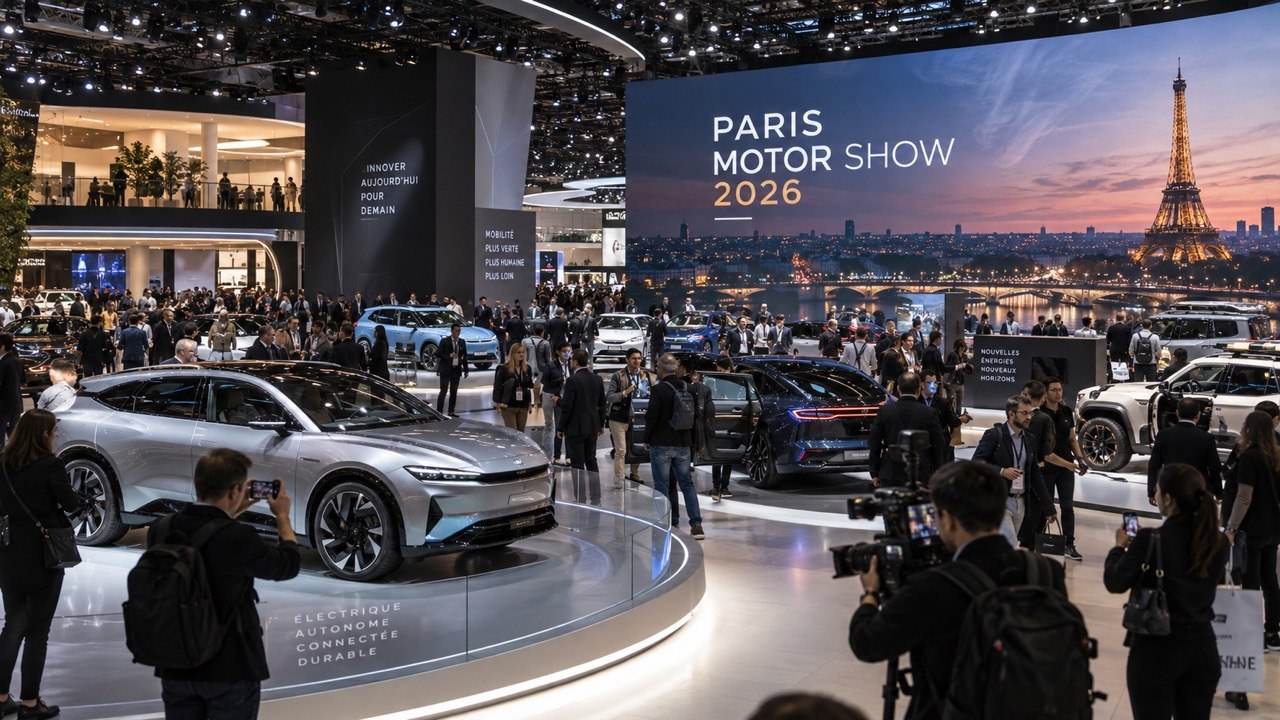
Cover photo: AI-generated illustration of the Paris Motor Show 2026 (OpenAI / ChatGPT). Not an actual event photograph.

Szilárd Szélpál served as an environmental expert in the European Parliament from 2014, where he utilized his expertise to influence policy-making and promote sustainable practices across Europe. In addition to his environmental work, Szilárd has a deep understanding of foreign affairs, offering strategic advice and contributing to the development of policy initiatives in this field.
Support independent analysis and journalism at CEA Magazine: https://centraleuropeanaffairs.com/donation
For more insights on Central European political risk, EU institutional developments, and transatlantic relations, follow CEA Magazine and the CEA Talk podcast.
