
The Relationship Between Education and Society in Light of the PISA Assessments
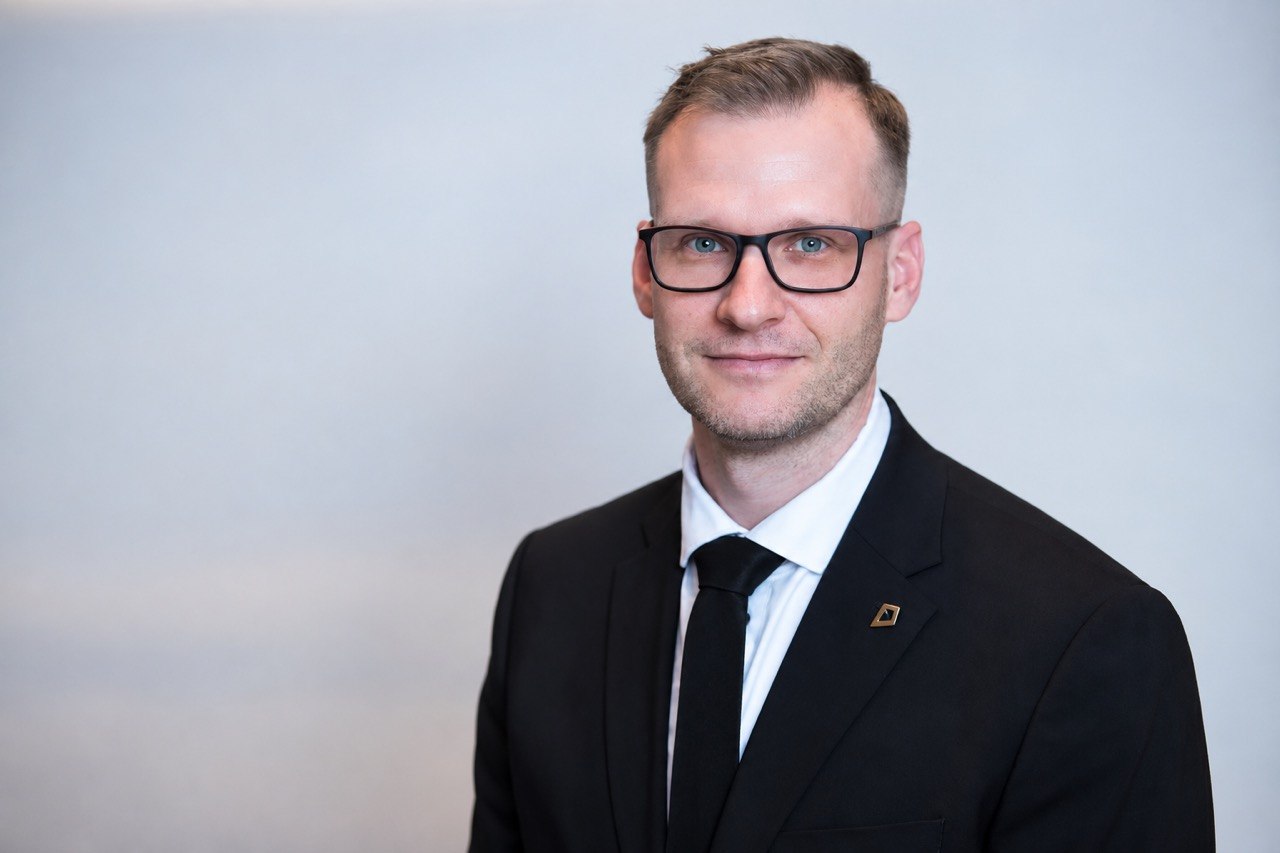
Author: István Pukli
The World Is No Longer the Same
There comes a point when education can no longer be discussed simply as a matter concerning schools, teachers and students. The world around us has changed. Agricultural land, water, energy, food, critical raw materials and technological knowledge are increasingly becoming strategic resources. According to the FAO’s 2025 report, more than 60 percent of human-induced land degradation affects agricultural areas, while agriculture accounts for more than 70 percent of global freshwater withdrawals. According to the organisation, land degradation, water scarcity and extreme weather events are posing increasingly serious challenges to food production.
In this world, countries are increasingly engaged in a competition for survival. Who can generate more knowledge? Who is capable of adapting more quickly? Who can transform their scientific and technological capabilities into economic strength? Who can secure their own access to energy, food, technology and critical raw materials? And finally, which society is capable of raising people who, in this changing world, can not only implement change but also shape it? In this context, PISA takes on an entirely different significance.
The OECD’s 2025 PISA report begins by acknowledging that the world is changing at an unprecedented pace and that young people therefore need knowledge, skills and agency that will enable them to adapt and engage in lifelong learning. More than 760,000 students from 91 countries and economies participated in the 2025 assessment.
PISA, therefore, is about much more than where a country stands in an international ranking. It provides an insight into what knowledge a society considers important, how it prepares the next generation for a changing world, and how effectively its education system can adapt to its social and economic environment. Moreover, the 2025 results show that the overall performance of OECD countries has fallen to historic lows in all three main assessment domains, while some systems continue to demonstrate outstanding performance.
You Cannot Simply Copy Successful Countries
This is important because we tend to talk about successful education systems as though we could simply extract a few elements that work well and incorporate them into another country. One of Cambridge Assessment’s international comparative studies warns against precisely this approach. According to the researchers, the effectiveness of high-performing education systems must be understood in conjunction with their cultural and social environments. The social value attached to education, the status of the teaching profession, parental expectations, teachers’ professional autonomy, their involvement in decision-making, and the cultural importance of learning are all factors that can collectively shape the functioning of a system. Cambridge places particular emphasis on the fact that these factors do not establish simple causal relationships and that merely copying another country’s education system does not guarantee the same results. In other words, when we look at Denmark, England, Estonia, Finland, Singapore or China, we are not actually looking at six recipes for education policy. We are looking at six different societal responses to the same increasingly urgent question: how do we prepare the next generation for a world in which knowledge is becoming an increasingly important strategic resource?
Denmark: Running Schools on Trust
In Denmark, trust, cooperation and professional autonomy are important elements of this social environment. Teachers’ work is not treated merely as a task of implementing instructions, and the functioning of schools is surrounded by broader social trust. However, PISA 2025 also warns that even such a system cannot be regarded as a completed model. A substantial proportion of Danish students continue to achieve basic proficiency levels, but OECD data show a decline compared with the 2022 assessment, and there are also areas where adjustments are needed in the longer term. For me, therefore, the Danish example is not a “model to follow”. Rather, it illustrates that a society must be capable of changing its education system even when its foundations are otherwise stable. Trust alone is no substitute for adaptation.
England: Knowledge, Assessment and Institutional Coherence
In England, different priorities have emerged. Greater emphasis is placed on knowledge, curriculum content, assessment and institutional accountability. In PISA 2025, the United Kingdom ranked among the ten strongest education systems in all three main assessment domains, while the OECD also recorded an improvement in the country’s science performance compared with 2022. This does not mean that the English system is free of problems. Quite the opposite: the country’s own experience shows that even alongside consistent curriculum and assessment policies, inequalities and the question of which students fall behind basic proficiency levels require continuous attention. The English example therefore raises another question: to what extent can an education system remain consistent, knowledge-centred and adaptable at the same time?
Estonia: A Small Country’s Big Question
Estonia is particularly interesting because it demonstrates how a small country can partially offset the limitations arising from its size through knowledge, innovation and adaptability. In PISA 2025, Estonia ranked among the strongest education systems in all three main assessment domains, and according to OECD data, the vast majority of students achieve at least basic proficiency in mathematics and reading. What makes the Estonian story interesting, therefore, is not simply its schools. For a small country, the realisation may be particularly clear that if it does not possess vast natural resources or demographic reserves, knowledge, innovation and human adaptability become some of its most important strategic resources.
Finland: Even Success Is Not Forever
Finland is worth considering from precisely the opposite direction. For a long time, the Finnish education system was one of the most important reference points in international education policy debates. However, PISA 2025 demonstrates that previous success offers no permanent guarantee: Finland’s performance has declined in several areas, and the OECD’s longer-term data also reveal significant changes. The Finnish story is therefore at least as important as Finland’s earlier success. It warns us that organising education successfully once is not enough for a society. The environment changes, technology changes, children change, the world of work changes, and education must change along with them. Those who found the right answer yesterday must still ask themselves today: is it still the right answer?
Singapore: When Knowledge Becomes a National Strategy
Singapore represents an entirely different social logic. For a small state with limited natural resources, human knowledge has become a particularly important resource. Education is therefore closely linked to economic development, workforce adaptability, and scientific and technological progress. In PISA 2025, Singapore was among the highest-performing education systems in all three main assessment domains. Singapore’s official education policy documents also clearly demonstrate that education is addressed in conjunction with future labour market and economic challenges, skills development and lifelong learning. At this point, it becomes very difficult to regard education as an isolated public service. Schools are directly connected to the question of what economic and technological position the country intends to occupy in the coming decades.
China: Learning Is the Key to Survival
And this brings us to China. Naturally, the Chinese education system cannot simply be copied according to European standards. The society is different, the state functions differently, the historical background is different, and education has a different cultural significance. Cambridge Assessment’s earlier research also found that in high-performing education systems, the social value attached to education, respect for learning and hard work, parental expectations, and respect for teachers’ knowledge can all be important cultural factors. Shanghai was one of the cases examined in the research.
PISA 2025 also shows that Beijing, Shanghai, Jiangsu and Zhejiang, the Chinese participant designated by the OECD as B-S-J-Z, together with Singapore, ranked among the highest-performing education systems in all three main assessment domains. An important clarification is necessary: these are not the results of China as a whole, but the combined assessment results of the four Chinese regions.
However, the significance of Chinese education cannot be explained by PISA alone. Within China’s approach to state development, education, science, technology and talent development are closely interconnected fields. Documents published by China’s Ministry of Education in 2025 also emphasise the need to coordinate education, scientific and technological development, and talent cultivation.
And this is where the meaning of the statement that learning is the key to survival becomes truly clear. Survival here does not refer to the personal survival of individual children. We are talking about the adaptability of a country and a society. About whether it can preserve and expand its own room for manoeuvre in an era when natural resources are becoming scarcer, energy supply is a strategic issue, technological development is accelerating, and scientific competition is increasingly directly linked to economic and geopolitical power.
In the coming decades, countries will not simply compete for products. They will also compete for scientific capacity, artificial intelligence, advanced manufacturing technologies, energy technologies, biotechnology, skilled labour and economic room for manoeuvre. Those who are strong in these areas will retain more opportunities to adapt to changes in the world. China has established strong positions through this strategic development.
And Now, Let Us Look at Hungary
This is where what international comparisons tell us about the relationship between society and education becomes truly important. Cambridge’s research warns that an education system cannot be separated from the society in which it operates. Schools function within a social environment, and its values, norms, expectations, relationships of trust and institutional culture influence education in return.
Hungary’s problem, therefore, runs deeper than the curriculum, the number of hours teachers teach, or whichever fashionable teaching methodology we happen to be following. The problem lies in the structure of society.
One of the important social legacies of the Kádár era was the world of ordinary people who had learned to adapt. People learned how to get by in a system in which individual room for manoeuvre and the protection of one’s own interests often proved more important than collective action. The transition to democracy did not erase this pattern. The development of a strong civic society stalled, individual advancement and personal connections often remained more powerful than a culture of collective action, and meanwhile, an atomised society emerged in which a great many people live alongside one another but find it much more difficult to become a genuine society.
Because a society is more than people living in the same territory, using the same institutions and experiencing the same problems. A society exists when people are capable of standing up collectively for their own interests, maintaining common institutions, taking responsibility for one another, and setting limits on power. When not everyone is exclusively concerned with finding individual solutions to their own problems, but also recognises that certain issues can only be resolved collectively.
The absence of this collective action is particularly dangerous in an era when countries should be building long-term strategic systems. Education, healthcare, social services, science and culture are not simply lines of expenditure in a national budget. They are the infrastructure of a country’s adaptability.
If a society does not treat these as shared strategic interests, it gradually dismantles its own future room for manoeuvre. This is where the situation of Hungarian teachers becomes particularly serious. According to the OECD’s TALIS 2024 survey, only 8 percent of teachers in Hungary agree that teachers are valued by society. The OECD average is 22 percent. Moreover, this proportion declined by a further three percentage points between 2018 and 2024. Only 15 percent of teachers believe that policymakers value teachers’ professional opinions. This goes well beyond whether teachers are satisfied with their salaries. The way a society regards its teachers also sends a message about how important it considers education. When the social recognition of teachers is this low in a country, it affects the entire education system in the long term.
The destruction of the past sixteen years has left a particularly serious legacy in this process. Centralisation, institutional conflicts, the declining social status of teachers and the persistent crisis of trust surrounding education have gradually reinforced the feeling that education is not a shared national concern, but an arena for political and power struggles. And in an atomised society, this can particularly easily become a self-reinforcing process. Everyone tries to solve their own problems. Parents look for a way out for their own children. Teachers try somehow to survive the system. Schools try to comply with regulations. Local communities try to resolve what is not resolved centrally. And those who can look for connections, loopholes and private solutions. This is how individual survival strategies replace collective action. And this is how we become a country of ten million people reporting on one another.
A society that should be devoting enormous amounts of energy to building education, science, healthcare, culture and functioning institutions instead frequently occupies itself with one another. People look for others’ mistakes, envy others’ privileges and question others’ advantages. Meanwhile, the shared objective is lost among individual grievances, conflicts and survival strategies. The trouble is that the world of the coming decades will become increasingly less tolerant of this.
The Real Competition Is Not Taking Place in the PISA Rankings
A few excellent universities, a handful of world-class researchers, several successful businesses or a few talented children are not enough for the competition for survival. What is needed is a society capable of creating knowledge, passing it on, maintaining its institutions, valuing its professionals, learning from its mistakes and pursuing shared long-term objectives.
Denmark seeks an answer through its culture of trust and cooperation. England approaches the question through knowledge, assessment and institutional coherence. Estonia follows the path of modernisation and adaptation. Finland’s experience warns us that even successful systems cannot rest on their previous achievements. Singapore treats knowledge as a national strategic resource. China, meanwhile, is integrating education, science, technology and economic development on a scale whose consequences Europe cannot ignore either. These are very different societies. Yet they have something in common: education is not simply a matter for schools.
In Hungary, meanwhile, we still talk about education far too often as though it were just another sector that somehow needs to find the resources to keep operating. Yet schools themselves are among the most important institutions through which society reproduces itself. They are where the next generation’s knowledge, thinking, ability to cooperate, independence and sense of community are developed. Society creates its education system, and its education system gives the next generation back to society. That is why, for me, the real question raised by PISA 2025 is not who has moved up or down an international ranking. The question is far more uncomfortable: what kind of society are we building while the world enters an increasingly fierce competition for survival?
In the coming decades, competition for agricultural land, water, energy, food security, technology, scientific achievement, artificial intelligence, skilled labour and economic room for manoeuvre will simultaneously be economic, scientific and social competition. In this competition, schools are not peripheral institutions. They are among the most important strategic infrastructure.
Learning is the key to survival.
If we take this seriously, we can no longer talk about education as though it were a sector that somehow needs to find the resources to operate within the national budget. We must talk about it as the system that determines whether a society will be capable of adapting to the coming decades.
And Hungary may find itself in trouble along this path not because Hungarian children are worth less than children in other countries. It may find itself in trouble because an atomised society struggles to generate the collective will that would enable it to treat education, science, culture and its institutions as genuine strategic resources over the long term. If we remain on this path, Hungary is doomed to fail. That is why, for me, PISA 2025 is not a ranking.
It is a mirror.
It shows us how our children are learning. But at the same time, it also shows us what kind of society we are. That is why the most important question is whether we can finally become a society that understands that, in the coming decades, we are not simply competing for economic growth.
We are competing for our own room for manoeuvre.
For our own future.
For survival.
Cover photo credit: István Pukli
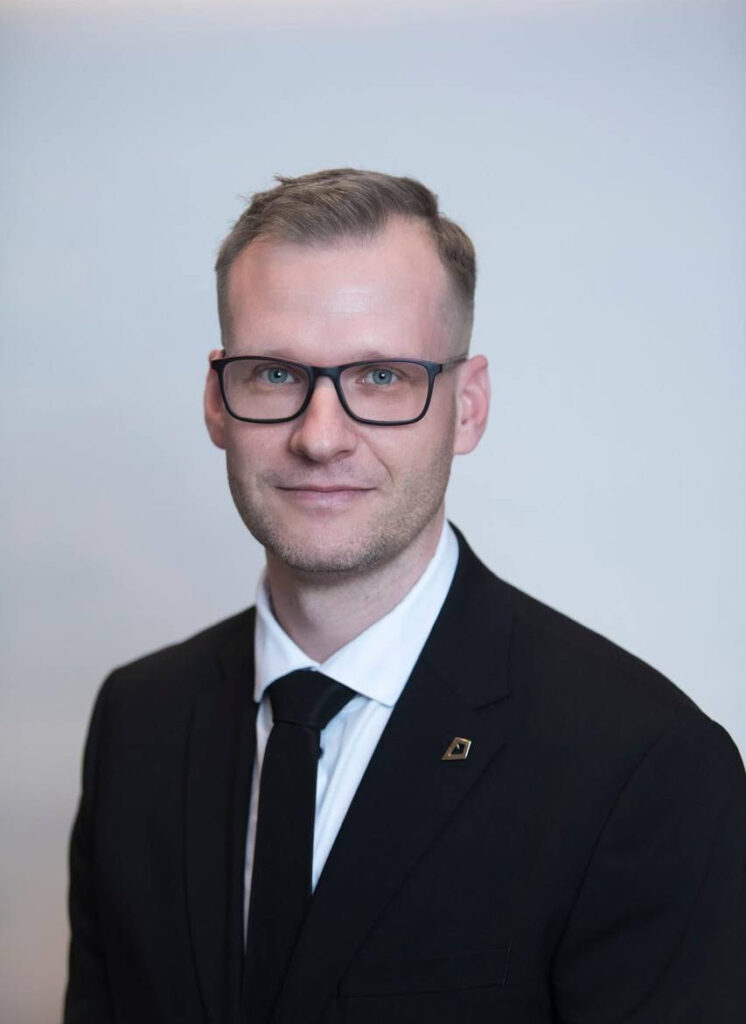
István Pukli is a Hungarian educator and former headmaster of Budapest’s Teleki Blanka Secondary School. He gained national recognition as a prominent figure in the Tanítanék (I Want to Teach) Movement. He currently lives in Denmark with his family.
Support independent analysis and journalism at CEA Magazine: https://centraleuropeanaffairs.com/donation
For more insights on Central European political risk, EU institutional developments, and transatlantic relations, follow CEA Magazine and the CEA Talk podcast.
