
Is the EU ETS Becoming a Competitiveness Trap?
The European Union’s climate policy was designed around a clear and ambitious promise: to reduce emissions, accelerate the green transition and place Europe at the forefront of the global low-carbon economy. At the centre of this architecture stands the Emissions Trading System, the EU ETS, often presented as the Union’s flagship market-based climate instrument.
Author: David R. Hohl
Yet a growing body of criticism now suggests that the ETS may be becoming something more problematic: not simply a carbon-pricing tool, but a structural cost burden on European industry, households and competitiveness. At a time when Europe is already struggling with weak growth, high energy prices, deindustrialisation pressures, rising defence spending and intensifying competition from the United States and China, the question is no longer whether Europe should decarbonise. It is how.
A recent Warsaw Enterprise Institute report, In Search of the Optimal Climate Policy: A Comparison of the Economic Impact of the ETS and Its Alternatives, argues that the EU’s current climate policy architecture has become economically inefficient and politically fragile. Its central claim is provocative but important: Europe may need to move away from a climate model based primarily on raising the cost of emissions and toward one that reduces the cost of investment, innovation and technological upgrading.
This is not an argument against decarbonisation. On the contrary, the report frames the issue as a question of how decarbonisation can be made faster, cheaper and more compatible with economic growth. But its critique of the ETS is sharp — and its proposed alternatives, Decarbonization Tax Cuts and Rapid Innovation Funds, deserve serious examination.
The ETS: Market Instrument or Quasi-Tax?
The EU ETS is frequently described as a market-based instrument because it creates tradable allowances for greenhouse gas emissions. In theory, the mechanism is elegant. A cap is placed on total emissions, companies must hold allowances for the carbon they emit, and the price signal encourages them to reduce emissions where doing so is cheapest. Over time, as the cap tightens, the price of emissions should rise and stimulate investment in cleaner technologies.
The problem, according to the WEI report, is that the ETS does not behave like a normal market. In an ordinary market, participants can respond to high prices by choosing substitutes, delaying purchases, switching suppliers or changing consumption patterns. For many ETS-covered firms, this flexibility is limited or absent. If a company operates in steel, cement, heating, chemicals or power generation, it cannot simply stop needing allowances overnight. In many cases, the technology required to cut emissions is expensive, unavailable at scale or dependent on infrastructure beyond the firm’s control.
This gives the ETS a quasi-fiscal character. Although allowances are not formally a tax, they function economically as a policy-imposed cost. Firms must buy them to continue operating. The cost reduces available capital for productive use, affects investment decisions and can feed into energy and product prices. The WEI report estimates that, in 2023, companies purchased ETS allowances worth roughly €43–46 billion. It further estimates that the negative effect of the ETS on the EU economy could reach up to €55.15 billion under its model assumptions.
The more worrying figure concerns the future. Once free allowances are phased out and ETS 2 is fully implemented, the report estimates that a “full-blown ETS” could impose annual costs of around €140 billion at a carbon price of €70 per tonne. This scenario would include not only the existing ETS sectors but also the extension of carbon pricing to road transport and building heating. If allowance prices rise significantly above €70, the total burden could become much larger.
This is where the policy dilemma becomes acute. Carbon pricing can be an efficient instrument when firms have realistic technological alternatives and sufficient capital to invest. But if the price rises faster than the availability of alternatives, it can become less of an innovation signal and more of a competitiveness shock.
The Problem of Price Volatility
One of the strongest parts of the report is its emphasis on price uncertainty. For long-term decarbonisation investment, companies need predictable conditions. They need to know whether a new plant, furnace, heating system, battery facility or industrial process will be commercially viable over many years. ETS price volatility makes that planning more difficult.
The report notes that allowance prices rose from around €20 in 2020 to as much as €100 in 2022, after having been as low as approximately €5 per tonne in 2017. This kind of movement may strengthen the incentive to reduce emissions, but it can also undermine investment planning, especially in sectors where technological transformation requires long lead times and large upfront capital expenditure.
For businesses, the issue is not only the price level. It is the combination of price volatility, regulatory obligations, compliance deadlines and the lack of short-term substitutes. A company may accept that carbon costs will rise over time. What is harder to manage is a system in which prices can multiply rapidly while the firm remains legally required to surrender allowances regardless of its liquidity position.
This matters particularly for energy-intensive industries and regulated utilities. The report’s business perspective section, based on interviews with Polish industry representatives, highlights the heating sector as an especially difficult case. Heating companies may face market-based costs, including ETS costs, while their revenues remain administratively regulated because heat supply is socially sensitive. If tariff adjustments lag behind allowance prices, companies face a squeeze that is not simply environmental, but financial and operational.
Unequal Burdens Inside the EU
The ETS applies a common carbon price across the Union. But a common price does not mean a common burden.
This is a crucial point. The same carbon price can have very different economic consequences depending on a country’s industrial structure, energy mix, income level, productivity and capacity to finance technological change. A highly service-based, wealthy economy with lower industrial exposure may absorb ETS costs more easily than a coal-dependent or manufacturing-heavy economy with lower margins and lower household incomes.
The WEI report argues that the ETS therefore has a strong distributional effect within the EU. It can hit poorer and more industrially exposed economies harder than wealthier, service-oriented economies. Poland, the Czech Republic, Bulgaria, Greece and other Central and Eastern European economies are presented as more vulnerable because their economic structures contain larger shares of conventional energy and heavy industry.
This does not mean that these countries should be exempt from decarbonisation. But it does mean that a single carbon price may not produce politically or economically symmetrical results. If the ETS drains capital from precisely those sectors and countries that need investment most, it risks slowing the transition rather than accelerating it.
The political consequences could be significant. Climate policy that is experienced as unfair or economically punitive can fuel public resistance, strengthen populist narratives and weaken support for European integration. This is especially relevant as ETS 2 is expected to extend carbon pricing to road transport and building heating — areas much closer to household budgets than industrial emissions trading.
ETS 2 and the Social Risk of Carbon Pricing
The planned expansion of carbon pricing to road transport and buildings may become one of the most politically sensitive elements of the EU climate agenda. The logic is clear: emissions from transport and heating must fall if Europe is to meet its climate objectives. Yet the social context is complicated.
Households do not all have the same capacity to respond to higher carbon prices. A wealthy urban household may switch to an electric vehicle, install a heat pump, improve insulation or use public transport. A lower-income rural household may have far fewer options. It may rely on an older car, live in a poorly insulated building and have limited access to public transport. For such households, ETS 2 could be experienced not as an incentive to innovate, but as an unavoidable increase in the cost of living.
This does not make carbon pricing wrong in principle. But it does underline a central weakness of the current model: the policy assumes that price signals will generate change, while the ability to respond to those signals is deeply unequal. Without sufficient investment, infrastructure and targeted protection, ETS 2 risks becoming socially regressive.
The report’s warning is therefore not only economic but political. If climate policy becomes associated with rising heating costs, fuel prices and industrial decline, the EU may find it increasingly difficult to sustain public consent for the transition.
The Proposed Alternative: Decarbonization Tax Cuts
The first major alternative proposed in the report is the Decarbonization Tax Cut, or DTC.
The idea is relatively simple. Instead of increasing the cost of emissions, governments would reduce the corporate tax rate on income generated from the lowest-emission products in high-emission sectors. In the report’s formulation, this would mean an approximate five-percentage-point corporate income tax reduction for firms that achieve strong decarbonisation performance in sectors such as energy, transport, industry, real estate and power generation.
The policy logic is important. ETS penalises emissions. DTC rewards cleaner production. ETS raises the cost of continuing to operate with high emissions. DTC lowers the tax burden for firms that successfully produce lower-emission goods or services. In theory, this changes the incentive structure from punishment to reward.
The attraction of DTCs is that they are technology-neutral. Instead of politicians choosing specific technologies through subsidies, grants or industrial policy programmes, firms would compete to achieve lower emissions according to sector-specific metrics. A steel producer, cement firm, logistics company or property developer could benefit if it delivers measurable decarbonisation performance. The focus would be on outcomes rather than preferred technologies.
The report argues that DTCs would be easier for firms of all sizes to access than complex subsidy systems. Large companies are often better positioned to navigate grant applications, legal requirements and bureaucratic programmes. Smaller firms may lack the administrative capacity to benefit from such schemes. A tax-rate reduction linked to clear performance metrics could, in theory, be more accessible.
The economic estimates in the report are also attractive. It suggests that DTCs could have a fiscal cost of roughly €3.55–17.76 billion while generating an additional €6.75–44.4 billion in GDP per year. If these estimates are even broadly plausible, DTCs would offer a politically powerful argument: decarbonisation through lower taxes, higher investment and growth rather than through higher operating costs.
The Weaknesses of DTCs
The DTC proposal is intellectually attractive, but it is not without problems.
The first challenge is measurement. The idea depends on simple, well-understood and reliable emissions metrics for core products in high-emission sectors. In some areas, this may be feasible. In others, it could be difficult. Industrial processes differ widely, supply chains are complex, and emissions may occur at different stages of production. Defining which products qualify as “low-emission” could become politically contested and administratively complicated.
The second challenge is additionality. Would DTCs reward firms for emissions reductions that would have happened anyway? If a company was already planning to invest in cleaner technology because of market demand, energy savings or existing regulation, a tax cut might subsidise activity that did not require additional incentive. This does not make the policy useless, but it affects cost-effectiveness.
The third challenge is fiscal. Tax cuts reduce public revenues. The report argues that the growth effect would compensate for this, but such estimates depend heavily on multiplier assumptions, investment responses and national tax structures. In practice, Member States with weaker fiscal positions may hesitate to introduce new tax expenditures unless the revenue impact is predictable.
The fourth challenge is political coordination. Climate policy is already fragmented across EU and national instruments. Introducing DTCs would require careful alignment with state-aid rules, corporate tax systems, EU climate targets and existing industrial policies. Without coordination, the policy could create uneven incentives or become another layer of complexity.
Finally, there is a climate-governance question. ETS guarantees an emissions cap. DTCs incentivise emissions reductions but do not automatically guarantee a specific aggregate emissions outcome. If policymakers want certainty over total emissions, DTCs would need to be combined with other mechanisms, standards or monitoring systems.
Rapid Innovation Funds: Mobilising Capital for Clean Investment
The second major proposal is the Rapid Innovation Fund, or RIF.
RIFs are designed to make investment cheaper by creating tax advantages for debt financing used for investment in property, plant and equipment. In the report’s concept, interest income from qualifying debt would be tax-exempt on a reciprocal international basis. This would encourage investors to provide capital for productive investment, including decarbonising technologies, infrastructure and industrial modernisation.
The central idea is that Europe’s problem is not only emissions. It is underinvestment. If firms cannot access affordable capital, they cannot upgrade equipment, improve energy efficiency, modernise production or deploy cleaner technologies. RIFs would therefore act as a capital accelerator.
The report presents RIFs as technology-neutral and broadly accessible. Banks, bond investors, mutual funds, entrepreneurs and project developers could participate. Funds could finance individual projects or pools of investments. The goal would be to mobilise private capital rather than rely primarily on public subsidies.
This is an important shift in perspective. Much of EU climate policy has focused on regulation, pricing and public funds. RIFs would try to use financial markets more directly to accelerate capital formation. In combination with DTCs, the report argues, RIFs could create a positive feedback loop: DTCs would improve the returns from low-emission production, while RIFs would lower the cost of financing the investments needed to achieve it.
The report estimates that RIF-eligible investment could amount to hundreds of billions of euros across the EU, with a tax cost of around €1.94–4.19 billion and a positive GDP effect of approximately €3.68–10.48 billion per year. Compared with the current and projected cost of the ETS, these figures are presented as a relatively low-cost way to stimulate investment.
The Weaknesses of RIFs
RIFs also raise several concerns.
The first is again additionality. A tax exemption for investment finance may not always create new investment. Some projects may simply be reclassified to qualify for favourable treatment. Others may be accelerated rather than genuinely added. That can still be useful, but it weakens the claim that all RIF-supported investment represents new decarbonisation capacity.
The second concern is financial-market design. If RIFs are not carefully regulated, they could become vehicles for financial engineering rather than productive investment. Any scheme that offers tax-exempt returns will attract investors. The key question is whether the money genuinely flows into new productive assets or whether intermediaries capture much of the benefit.
The third concern is distributional. Wealthier countries with deeper financial markets may be better positioned to mobilise RIF capital. Unless designed carefully, the mechanism could reinforce existing investment gaps between Western Europe and Central and Eastern Europe. The report recognises that the gains from DTCs and RIFs would not be evenly distributed and that complementary pro-investment reforms would be needed.
The fourth concern is climate specificity. RIFs promote investment in general, including decarbonising investment. But if eligibility is too broad, funds may support capital upgrades with only indirect or modest climate benefits. If eligibility is too narrow, the scheme may lose its simplicity and become another bureaucratic green-finance instrument. Finding the right balance would be essential.
Why the Combination Matters
The strongest version of the report’s argument is not that DTCs or RIFs alone should replace the ETS overnight. It is that climate policy should be redesigned around the investment side of the transition.
Carbon pricing asks: how do we make emissions more expensive?
DTCs and RIFs ask: how do we make cleaner production and capital renewal cheaper?
That difference matters. Europe’s competitiveness problem is increasingly linked to energy costs, regulatory complexity and weak investment. A climate policy that raises costs without accelerating technological renewal risks deepening the problem. A policy that lowers the cost of capital, rewards measurable emissions reductions and supports industrial upgrading may be more compatible with growth.
The best case for DTCs and RIFs is therefore not ideological. It is practical. Europe needs more clean investment, faster deployment, cheaper capital, higher productivity and stronger industrial resilience. If climate policy is seen as a burden on production, it will face resistance. If it is seen as a way to modernise production, it may become politically more durable.
What Should Happen During the Transition?
Even if the EU were to consider alternatives to the ETS, the transition could not happen overnight. The ETS is deeply embedded in EU climate law, national budgets, corporate compliance systems and investment expectations. Abrupt abolition would create legal, fiscal and environmental uncertainty.
The WEI report therefore proposes temporary reforms for the transition period. These include a shift away from automatic penalties toward a more proportionate compliance model, especially for firms facing short-term liquidity problems rather than deliberate evasion. It also proposes reinforcing safeguard mechanisms, temporarily extending some protective measures, and considering targeted exemptions where short-term abatement is not feasible or where system stability is at risk.
This is politically important. The report’s transition recommendations implicitly recognise that the ETS cannot simply be switched off. Firms, regulators and governments need stability. Any reform must avoid creating a regulatory vacuum or weakening the credibility of EU climate goals.
However, these temporary measures also reveal the difficulty of reform. Once a system becomes highly complex, even correcting its side effects requires additional intervention. This is one of the strongest arguments against over-complex climate governance: each new correction may solve one problem while creating another.
A Necessary Critique, But Not a Complete Answer
The WEI report is valuable because it challenges the assumption that the ETS should be treated as untouchable. Carbon pricing has become central to EU climate policy, but centrality should not mean immunity from reassessment. If the economic and social costs of the system are rising, and if its design creates volatility, unequal burdens and investment uncertainty, then reform is legitimate.
At the same time, the report should not be read as a complete blueprint. Its estimates rely on stylised assumptions. Its modelling is a first-pass comparison rather than a full structural simulation of the European economy. Its treatment of DTCs and RIFs is necessarily hypothetical, because the final legal and administrative design of such instruments does not yet exist. The climate impact of the alternatives would need much deeper modelling, especially if they were to replace rather than complement the ETS.
The report is also clearly advocacy-oriented. It makes a strong free-market case against the current climate policy model. That perspective is valuable, especially in a European debate often dominated by regulatory and subsidy-based approaches. But a stronger policy package would need to engage more fully with counterarguments: the role of emissions caps, the risk of underpricing carbon, the challenge of measuring product-level emissions, and the possibility that tax incentives alone may not deliver emissions reductions fast enough.
In other words, the report asks the right question, but its answer requires further testing.
The Real Choice Facing Europe
Europe’s climate challenge is no longer simply about ambition. The EU has no shortage of targets, strategies or legal frameworks. The real challenge is implementation under conditions of economic pressure.
Can Europe decarbonise while preserving industrial capacity?
Can it reduce emissions without accelerating deindustrialisation?
Can it maintain public support for climate policy while households face rising living costs?
Can it compete with the United States and China while imposing higher energy and regulatory costs on its own firms?
These are now the central questions of European climate policy. The ETS may remain part of the answer, but it cannot be treated as the only answer. The debate must shift from carbon pricing as doctrine to climate policy as economic strategy.
The WEI report’s most important contribution is therefore not simply its criticism of the ETS. It is its insistence that decarbonisation should be connected to capital formation, innovation, productivity and competitiveness. A successful European transition cannot be built only on making old technologies more expensive. It must also make new technologies cheaper, easier to finance and faster to deploy.
That is where the future debate should begin.
Europe does not need to choose between climate policy and economic growth. But it does need to choose climate policies that are capable of delivering both. If the ETS is becoming a competitiveness trap, then reform is not a retreat from the Green Deal. It may be the only way to make the transition economically sustainable.
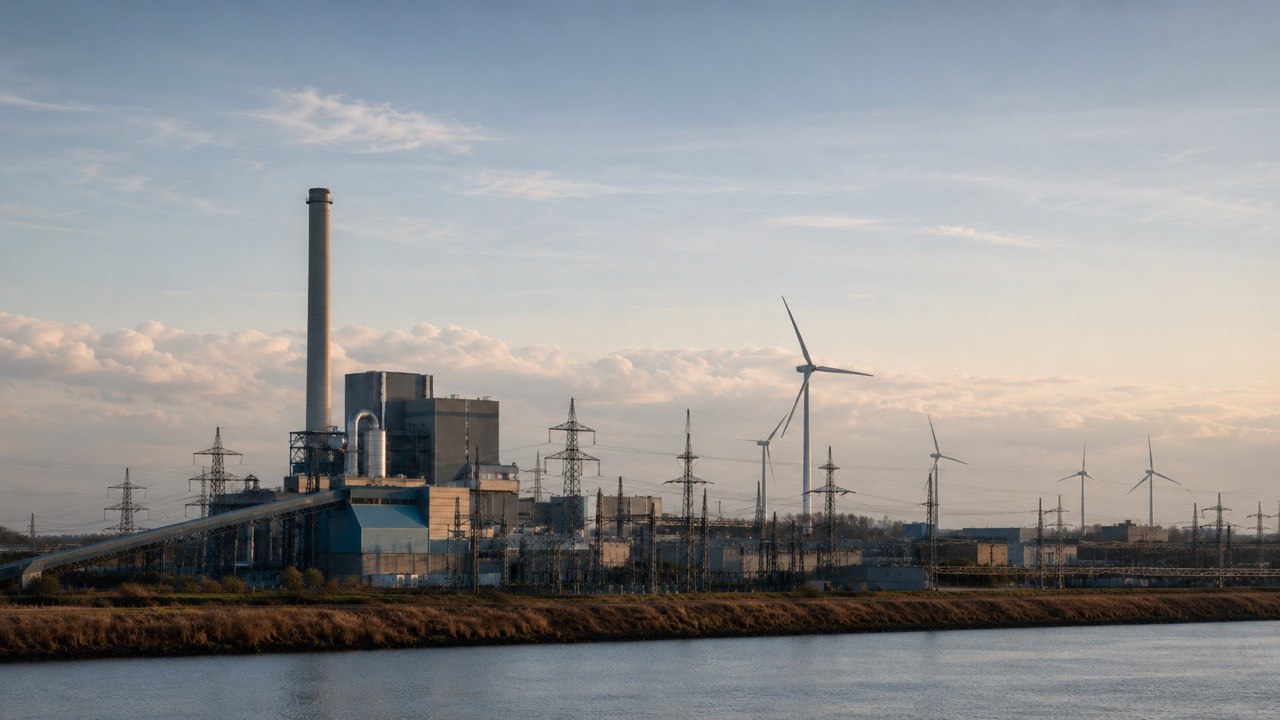
Cover photo: CEA Magazine. Edited with AI assistance using ChatGPT

David R. Hohl is an economic historian and researcher focused on Central European economic transformation, innovation, and regional development. His work combines historical insight with contemporary economic analysis, supported by international research collaborations across Europe.
Support independent analysis and journalism at CEA Magazine: https://centraleuropeanaffairs.com/donation
For more insights on Central European political risk, EU institutional developments, and transatlantic relations, follow CEA Magazine and the CEA Talk podcast.
