
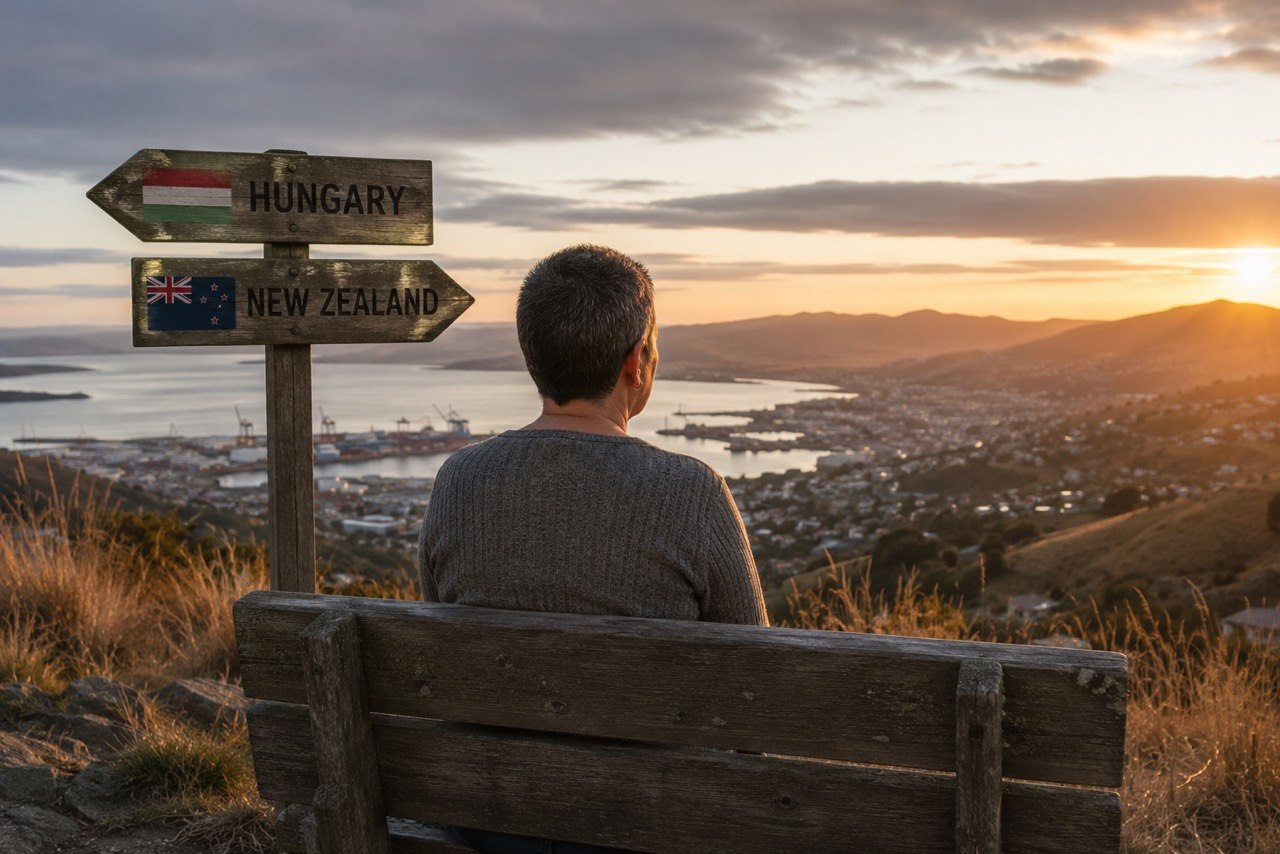
Sixteen years ago, I left Hungary for New Zealand, partly to get as far away as possible from what I already saw unfolding at home. To my surprise, I felt at home almost from the first moment. New Zealand became my chosen country: a place where everyday kindness, public dignity and community solidarity made life feel livable. Yet Hungary remained painfully present through my family, friends and the news I followed from afar.
Author: Zsuzsanna Almásy
When We Left
In 2010, my partner and I left Hungary. It was before the election, but the signs were already visible, and we did not like what we saw. We had a very small business, and strange as it is to write this, corruption and the harassment of certain authorities already played a significant role in the fact that we practically went bankrupt. We chose New Zealand because there was hardly anywhere farther away to go.
Two People, Two Emigrations
My partner, who moved back to Hungary permanently last year and to whom I have been adding the prefix “ex” for two years now, never found his place here. He had serious difficulties reaching a proper level of English, and the cultural environment did not satisfy him either. Throughout his time here, he felt like an outsider, a stranger. I will not say more about him. It would not be fair. His situation matters only because I experienced the exact opposite. Honestly, I felt at home from the very first moment. I think it was something like the feeling I saw on Hungarians on the evening and night of April 12. I watched a thousand videos and cried. The much-discussed culture shock avoided me. I generally adapt easily. I was happy about every positive sign, every experience, even the smallest thing.
Everyday Life in an Immigrant Country
New Zealand is an immigrant country. I do not know the statistics, but I can see that since I have lived here, the population has grown significantly, and not because of natural population growth. People in the streets, in shops, and in public offices are prepared for the fact that you have an accent and that you may not know how everyday matters work. They help, understand and pay attention. These positive qualities became more valuable to me in direct proportion to the worsening situation in Hungary. I cannot be grateful enough to fate that I was able to observe the entire Orbán period from the outside. Not as an outsider, of course, because my whole family remained there. My outlook on life, focusing more on the good than on difficulties, contributed greatly to the fact that I experienced my integration as almost seamless.
Starting Again From the Bottom
In the world of work, I accepted whatever came. I only have a secondary-school qualification. Whatever ability or skill I can show, I achieved as a self-made person. From being a small-business owner, I became a cleaner here, then a sewing-factory worker, until I gained a profession here. Now I care for people with disabilities. For a short time, I had a one-person food business, which Covid brought to an end, so I returned to my local profession. I also do crafts alongside it. I try to live a full life.
Why a Country Feels Livable
Culturally, New Zealand is indeed far from Europe and Hungary. That is true, and it has taken many people back from here. When I think about that, I get into my car, and ten minutes later I am surrounded by landscapes that take my breath away. Or I have to go into a public office, and the person sitting on the other side of the desk speaks to me as someone who understands that their salary ultimately comes from me. Or I walk into a hardware store, where my necessary vocabulary is roughly minus two, and the assistant listens and pays attention for ten minutes, trying to figure out what the one-dollar thing is that I want to buy. This is a livable country. That is what I usually say.
If It Can Be Like This, Why Not at Home?
When things in Hungary began to seriously deteriorate, I just watched in disbelief. If it can be like this here, then why not there? My ex-partner had two heart attacks here. He also had hospital experiences in Hungary, more than one. We had a close look at the healthcare situation in both countries. I do not want to go on about it for too long. It is enough to say that he was reluctant to come home from hospital here. That was his only fear about moving back to Hungary: the state of healthcare. Since then, he has already experienced the difference.
Earthquakes, Terror Attack and Community
I lived through two major earthquakes in Christchurch, in September 2010 and February 2011. That was when I experienced for the first time in my life, at the age of fifty, what real community solidarity means. I could sing praises about that period for hours. I also think of the 2019 shootings at the mosques. An entire country stood beside the Muslim community. Those who tried to speak against them, because there were some, were very quickly drowned out by the majority.
I Love This Country
I love this country. I love my life here. I think that is clear from the above. And at the same time, for sixteen years my heart broke whenever I looked at Hungary, listened to my family and friends, or read the news. Public life and the public mood have always affected me deeply, as someone who is strongly extroverted. That is why I never felt homesick, not for a single minute. My personal ties were missing: my friends from childhood and teenage years, my family. Yes, I missed them. But that is where the list ends.
Half a Year Here, Half a Year There?
What happens now, when we may have every reason to hope that the situation will change? I am trapped by the pension situation. If I leave New Zealand, I lose the so-called pension here, while the Hungarian one would not be enough for even cold water. The New Zealand pension system is fundamentally different from the Hungarian one. If I leave for only half a year, I receive the full amount here. Half a year here, half a year there. For now, it does not sound bad to live both in my homeland and in my chosen homeland. At least as long as my health can cope with the occasional 35 to 45 hours of travel. We will see what the future brings.
Cover photo credit: Zsuzsanna Almásy
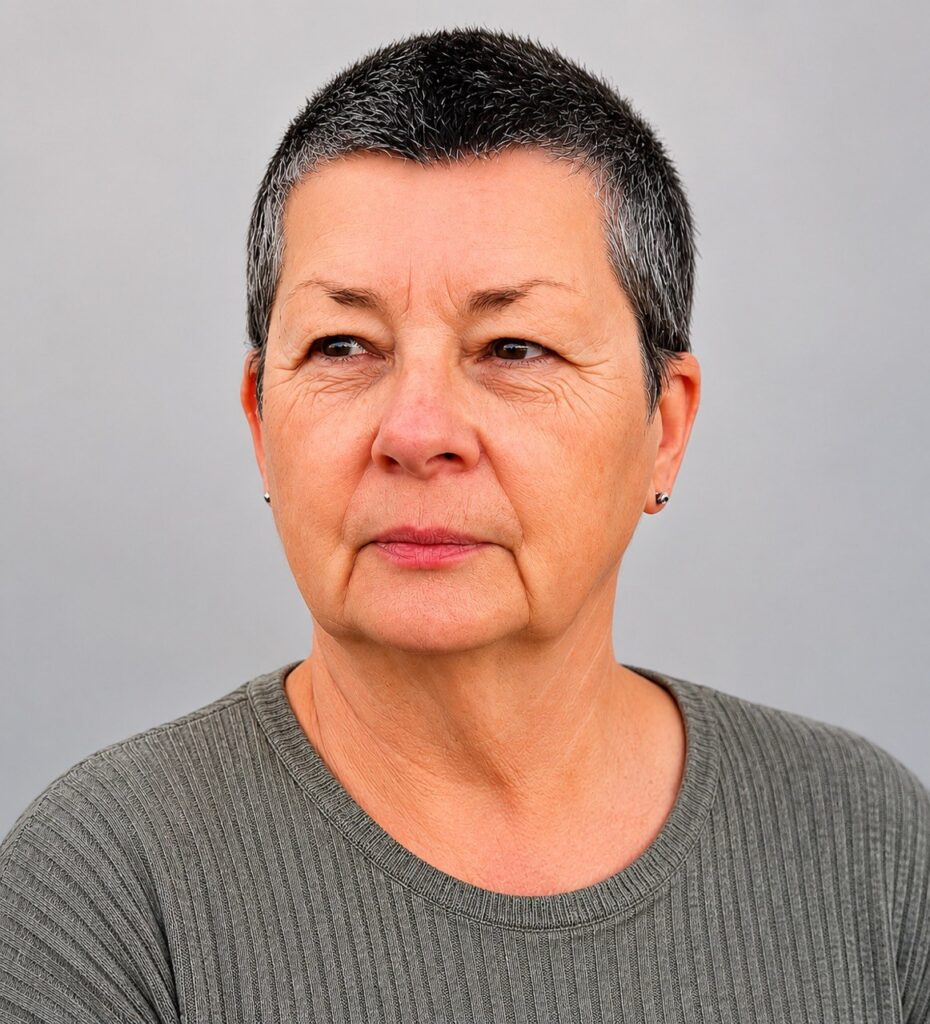
Zsuzsanna Almásy is a Hungarian writer living in Christchurch, New Zealand, where she emigrated sixteen years ago at the age of fifty. Formerly co-owner of a small custom furniture workshop in Hungary, she later retrained in New Zealand and now works in disability care. Alongside her profession, she is active in crafts and Hungarian-language poetry. She began writing after emigrating, and her second poetry volume is currently in preparation.
Support independent analysis and journalism at CEA Magazine: https://centraleuropeanaffairs.com/donation
