
After years of rapid expansion, AutoWallis faces new challenges as Europe’s automotive industry evolves. Growing Chinese competition, the shift to electric vehicles and rising costs are reshaping the market. As highlighted during the conference panel, future success will depend on balancing growth with profitability, financial stability, digitalisation and carefully selected acquisitions.
This article is the third instalment in our series examining the key insights from the AutoWallis Investor Conference.
Author: David R. Hohl
A New Phase After Years of Rapid Growth
AutoWallis has expanded considerably in recent years, developing from a major player in the Hungarian automotive retail market into a regional automotive distribution, retail and mobility group. This expansion has been driven by the introduction of new brands, the development of dealership networks, acquisitions and a stronger international presence. Today, the company’s business model extends well beyond vehicle sales, covering wholesale distribution, retail operations and mobility services.
The scale of this expansion is reflected in the company’s 2025 results. AutoWallis Group increased its revenue by 20% to HUF 477 billion, while the number of vehicles sold rose by 11.7% to 54,046 units. Including businesses jointly managed with strategic partners, the group’s overall market presence represented approximately HUF 587 billion in revenue. These figures demonstrate that AutoWallis has translated its growth ambitions into a substantial expansion of its operations.
The conference panel discussion, however, made it clear that the factors determining success in the coming years may differ considerably from those that supported growth in the past. Europe’s automotive market is undergoing a technological transition, a reshuffling of competitive positions among manufacturers and increasingly intense pressure on costs. In this environment, expansion alone is no longer enough. Companies must operate their existing businesses profitably while continuing to invest in the capabilities needed for the next stage of development.
Growth Comes at a Cost, and the Results Are Beginning to Show It
One of the defining characteristics of rapid expansion is that the costs associated with new businesses, brands and dealership networks often arise well before they generate additional revenue and profit. Introducing a new automotive brand involves far more than signing a distribution agreement. It requires a sales network, aftersales infrastructure, employees, marketing activities, IT systems and, in many cases, substantial investment in vehicle inventories.
This was evident in AutoWallis’s financial results for the first half of 2026. Revenue declined by 6.6% year on year to HUF 219.9 billion, while EBITDA fell by 30.7% to HUF 5.6 billion. The EBITDA margin decreased from 3.4% to 2.6%, and net profit dropped from HUF 2.46 billion to HUF 172 million. These developments occurred despite a relatively modest decline of just 0.7% in vehicle sales, which totalled 26,125 units.
The figures highlight an important distinction: relatively stable sales volumes do not necessarily translate into stable profitability. Changes in margins, the initial costs of introducing new brands, exchange rate movements and operating expenses can collectively put considerable pressure on earnings. According to the company’s first half report, weaker performance from established brands, the launch costs of new Chinese brands and changes in market conditions all contributed to the decline in profitability.
The strategic approach discussed during the panel therefore placed considerable emphasis on improving efficiency, controlling costs and making better use of existing capacity. The challenge is not simply to reduce expenditure, but to determine which investments genuinely strengthen long term competitiveness and which may struggle to deliver an adequate return in a rapidly changing market.
Chinese Competition Is No Longer a Future Concern
The growing presence of Chinese manufacturers is one of the most important forces reshaping the European automotive industry. Brands such as BYD, MG and Chery are expanding their European operations with broader model ranges, competitive pricing and rapid technological development. Competition is no longer confined to fully electric vehicles, with Chinese manufacturers also making their presence felt in the hybrid and conventional vehicle segments.
According to the European Automobile Manufacturers’ Association (ACEA), new passenger car registrations in the European Union increased by 5.7% during the first nine months of 2026. Over the same period, the market share of battery electric vehicles rose from 16.1% a year earlier to 22.7%, while hybrid electric vehicles accounted for 36.3% of registrations. The combined share of petrol and diesel vehicles, meanwhile, declined to 28.2%.
The technological transition is clearly gathering pace, but progress remains uneven across Europe. Purchasing power, government incentives, charging infrastructure and consumer preferences vary significantly between countries. For an automotive group operating across several markets and representing multiple brands, this makes diversification particularly important. Rather than relying on a single manufacturer or technology, the business must remain capable of responding to different patterns of demand in each market.
For AutoWallis, Chinese competition presents both challenges and commercial opportunities. Pricing pressure on established brands may weaken profitability in the short term, while distributing new manufacturers’ vehicles and developing their dealership networks can open up additional sources of revenue. The company’s first half 2026 report specifically noted that stronger competition from Chinese manufacturers had contributed to declining KGM sales, while the introduction of new brands was still generating additional costs.
Choosing the right brand portfolio is therefore becoming an increasingly important aspect of strategic risk management. Identifying the next fast growing manufacturer is only part of the task. Companies must also assess whether a brand can establish a sustainable market position, provide reliable servicing and parts support, and maintain a commercially viable distribution model over the longer term.
Growth at Any Cost Is No Longer the Objective
One of the central messages of the conference was that growth can only be considered successful if it creates value over time. During periods of rapid expansion, companies naturally focus on entering new markets, securing brands and acquiring businesses. In a less predictable economic environment, however, operational performance, access to financing and the return on investment become equally important.
This is particularly relevant to AutoWallis because its business divisions operate with different capital requirements and profitability profiles. Wholesale distribution is sensitive to the manufacturer’s product portfolio, exchange rates and sales volumes, while retail operations depend heavily on dealership costs, staffing and inventory financing. Mobility services, by contrast, follow a different investment and operating model.
The company’s first half 2026 figures illustrate these differences. Revenue in the distribution division declined by 17%, while retail revenue increased by 2.1%. Mobility services recorded revenue growth of nearly 25%. Diversification can therefore help offset weaker performance in individual markets or business areas, although it cannot eliminate the profitability risks affecting the group as a whole.
The financial discipline emphasised during the panel should not be interpreted as a retreat from the company’s growth ambitions. Rather, it reflects the recognition that, as a business becomes larger and more complex, new investments must contribute not only to higher revenue but also to more efficient use of capital.
Market Consolidation Could Create New Opportunities
Structural changes in Europe’s automotive retail sector may accelerate consolidation over the coming years. Smaller and medium sized dealership groups could find it increasingly difficult to finance the technological transition, upgrade digital systems, maintain vehicle inventories and meet manufacturers’ investment requirements. Rising costs may consequently encourage businesses that previously had no intention of selling to consider partnerships or acquisitions.
For a regional group, this could provide opportunities to enter new markets and benefit from operational synergies. Higher sales volumes, centralised purchasing and IT systems, and more efficient use of logistics capacity can all improve economies of scale. However, an acquisition only creates genuine value when the acquired business can be successfully integrated into the existing organisation.
The panel discussion indicated that AutoWallis continues to monitor such opportunities, while placing greater emphasis on strategic fit and financial returns when evaluating potential transactions. This is particularly important at a time when future demand, manufacturers’ brand strategies and the pace of the electric vehicle transition are all less predictable than previously anticipated.
The key question for the coming years will therefore not simply be how many additional businesses or dealership networks AutoWallis can acquire. Equally important will be the profitability, organisational capacity and lasting competitive advantages that those acquisitions can deliver.
Poland, Romania and the Growing Importance of International Operations
Regional expansion remains a central element of AutoWallis’s strategy. Central and Eastern Europe is particularly important to the company because national automotive markets are developing at different speeds, creating opportunities to diversify risks and apply its business model across several countries.
The importance of international operations is reflected in the fact that AutoWallis generated 62.9% of its revenue outside Hungary during the first half of 2026. This substantial share demonstrates how closely the group’s financial performance is now linked to foreign markets, local consumer demand, national regulatory conditions and exchange rate movements.
Poland and Romania were both identified as important regional markets during the conference discussion. In Poland, the size of the automotive market and its growth potential make it particularly attractive, while Romania offers longer term opportunities associated with vehicle ownership and the development of automotive retail. Successful expansion, however, requires more than establishing a geographical presence. It depends on capable local management, strong dealership relationships and consistent operating systems that can deliver efficiencies across the wider group.
Internationalisation is therefore becoming an organisational challenge as much as a commercial one. The more countries and brands a group operates across, the more important it becomes to maintain comparable data, effective financial controls, efficient inventory management and coordinated business processes. In the next phase of expansion, these capabilities could prove just as valuable as another successful acquisition.
Digitalisation Is No Longer Optional
Digitalisation in automotive retail extends far beyond the development of online sales platforms. In a modern dealership business, customer relationship management, marketing, inventory systems, pricing, financing offers and aftersales services are becoming increasingly interconnected. Reliable digital infrastructure is no longer simply a convenience. It is an essential part of running an efficient operation.
During the panel discussion, digital investment was presented as both a cost and a strategic necessity. For a company operating across several countries, shared data and customer management systems can improve transparency, reduce inefficiencies caused by duplicated processes and provide a clearer picture of how individual brands and dealerships are performing.
Digital capabilities are becoming even more important as electric vehicles gain market share. Cars increasingly incorporate software based services, connected features and more complex customer support requirements. Dealerships must develop new expertise, particularly in aftersales services, customer guidance and the maintenance of long term relationships with vehicle owners.
The return on these investments is not always immediate. Introducing new systems, training employees and integrating IT platforms across different national operations can initially increase costs. Over time, however, these investments may provide the foundation for managing a larger business without a corresponding increase in operational complexity and expenditure.
The Strategy Remains, but the Measure of Success Is Changing
The challenges facing AutoWallis do not necessarily require a fundamental change in its growth strategy. Regional expansion, a broader brand portfolio, the development of mobility services and consolidation within dealership networks can all continue to provide commercial opportunities. What has changed is the level of financial and operational discipline required to pursue them successfully.
The contrast between the company’s strong growth in 2025 and its weaker profitability during the first half of 2026 illustrates this turning point. AutoWallis has demonstrated its ability to build a substantial regional automotive group. The next challenge is to show that the market positions it has acquired can generate sustainable returns. The initial costs associated with new brands and investments will ultimately need to be offset by stronger profitability, better capacity utilisation and more efficient operations.
From this perspective, the transformation of the European automotive industry presents both risks and opportunities. The growing influence of Chinese manufacturers, the transition to electric vehicles and the potential consolidation of dealership networks may reshape competitive positions across the market. At the same time, these developments could create attractive expansion opportunities for larger, more diversified and financially disciplined companies.
In the coming years, AutoWallis’s success will therefore be measured by more than revenue growth or the number of markets it enters. Its ability to maintain profitability, financial stability and operational efficiency while continuing to expand will be just as important. In a changing automotive market, the strongest position may not belong to the company that grows fastest, but to the one that knows when to expand, what price to pay and how to turn that growth into a sustainable business.

David R. Hohl is an economic historian and researcher focused on Central European economic transformation, innovation, and regional development. His work combines historical insight with contemporary economic analysis, supported by international research collaborations across Europe.
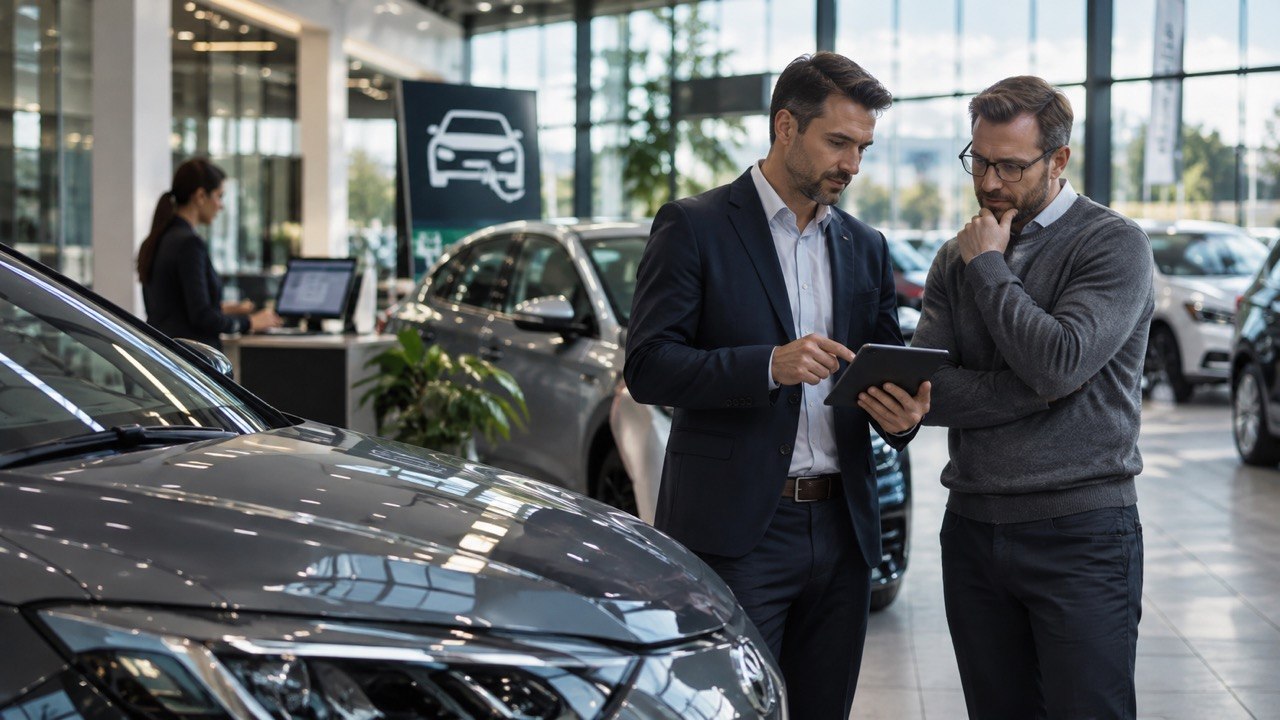
Cover photo: AI-generated illustration for CEA Magazine.
Support independent analysis and journalism at CEA Magazine: https://centraleuropeanaffairs.com/donation
For more insights on Central European political risk, EU institutional developments, and transatlantic relations, follow CEA Magazine and the CEA Talk podcast.
