
A new report by Hungary’s Free Market Foundation argues that millions of euros in EU public funding are being channelled through NGOs that then lobby the very institutions financing them, raising questions about independence, transparency and democratic accountability.
Author: Zoltán Kész
Civil society has a rich history in Europe: community action to make a difference in the lives of fellow Europeans is a cornerstone of European life. The practice of circular lobbying, however, has made it difficult for that trust to endure between non-governmental organizations and the government institutions that fund them.
A recent report by Hungary’s Free Market Foundation shows that the NGO sector has been lacking in transparency, to the detriment of civic life in Europe. The practice of circular lobbying, which essentially means the European Commission and state governments paying NGOs that then lobby those same institutions, has become a million-euro problem in the European Union.
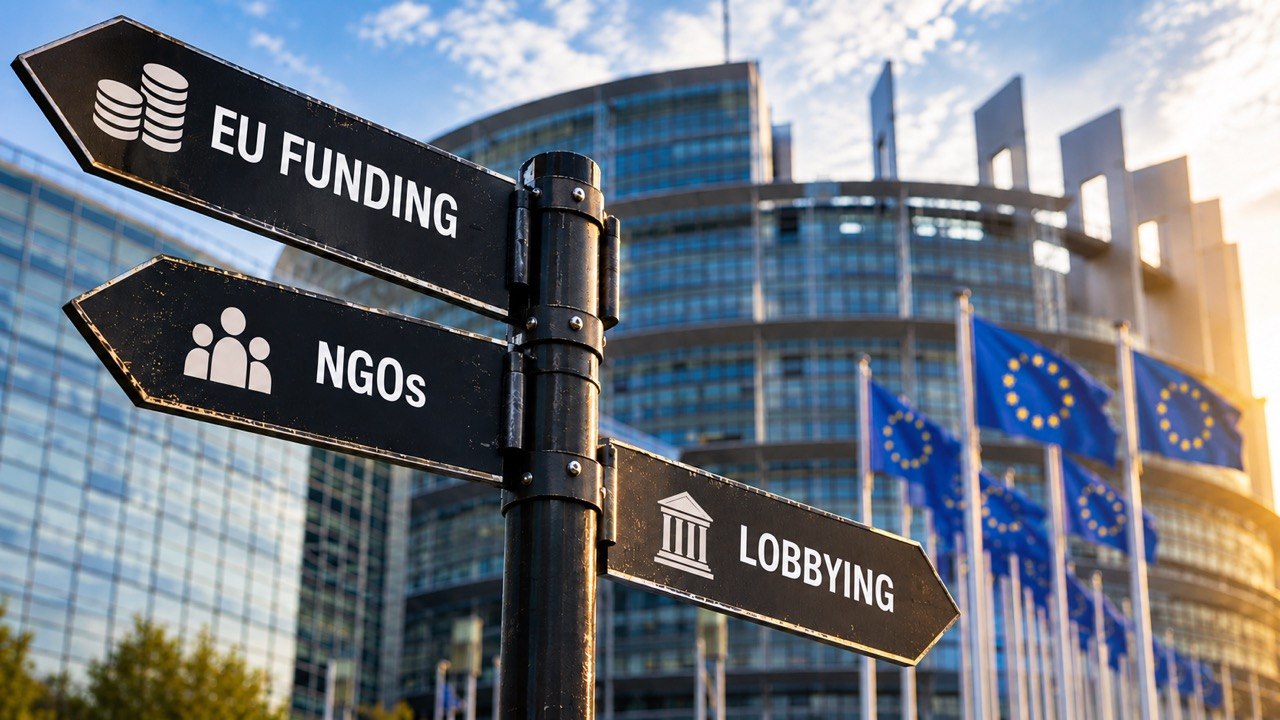
Circular Lobbying by the Numbers
By researching the funding of nine European NGOs, the report shows that approximately €12.8 million a year in public funding is transferred from European taxpayers to the European Commission and then to various NGOs, which use it to lobby the government. This vicious circle includes the employment of 110 people from these NGOs who have accredited access to the European Parliament. That is a direct way of lobbying the government that is not accessible to all Europeans, even though they are footing the bill.
This undemocratic practice has many problems, but this report makes two specific issues most apparent. First, these organizations are advocating for things that the Europeans who are paying may not agree with. Second, there is little transparency in where this money is coming from and what it is being spent on.
Advocacy Funded by Those Who May Disagree
NGOs should be able to carry out the activities they believe make their communities, and the world, a better place. We do not oppose NGOs; quite the opposite, we believe they are a vital part of a healthy civil society, but the way they are funded should not undermine their independence or public trust.
They should also be able to advocate for these positions, but not using the money of those who might not agree with these positions, or even be harmed by them. For example, the European Cancer Organization receives €1,462,517 from the European Commission in one year. Then it uses that money to advocate to the European Commission against harm reduction tools that Europeans desperately need to help them quit smoking and save their lives.
They also advocate for higher taxes on tobacco products, which mostly affects the poorest in society and provides a boon to the black market and the violence that comes along with it. The Commission has also pushed for flavor bans for years, as have the very organizations it funds. Surely the people of Europe have some questions about their money being spent on such a thing.
The Transparency Gap
European taxpayers’ questions about finances won’t be clearly answered, however, since the transparency associated with these payouts is often murky at best. For its part, the report shows that the European Cancer Organization does not yet have finalized 2025 numbers available on the Transparency Register. There is a note stating that the 2025 accounts will be updated in May 2026, but that had not actually been done at the time of the report in August. Their total budget as an organization was also omitted from the report, and they have not uploaded an Annual Report to their website since 2021.
Slow Food Europe also faces transparency issues, even as it receives €2,107,646.82 from the European Commission in one year alone. Despite all this money, they have not been able to update their figures on the EU’s Transparency Register, which only includes figures from 2024. The numbers listed in their Annual Report are confusing to read and unclear about which grants they have received to cover the government funding that accounts for 38% of their overall budget. Meanwhile, they are lobbying the European Commission with policies that make Europeans’ groceries more expensive and more politicized.
Rebuilding Trust in European Civil Society
The report is right to demand that NGOs do better. In the spirit of civil society, these NGOs should focus on gaining citizens’ support and securing funding from the very people they are trying to reach.
More immediately, these organizations must take transparency seriously. The European Commission should withhold funding if these organizations do not keep up-to-date records public through the EU’s Transparency Register and their own Annual Reports. The very Europeans who are funding their advocacy through circular lobbying should at least be able to see easily and clearly where the money is coming from and where it has been going.
The long history of European civil society depends on a more robust and transparent system that actually represents the very people it claims to serve.
Cover Photo Credit: AI-generated illustration / CEA Magazine.

Zoltán Kész is the Government Affairs Manager of the Consumer Choice Center and a former member of the Hungarian Parliament.
Support independent analysis and journalism at CEA Magazine: https://centraleuropeanaffairs.com/donation
For more insights on Central European political risk, EU institutional developments, and transatlantic relations, follow CEA Magazine and the CEA Talk podcast
